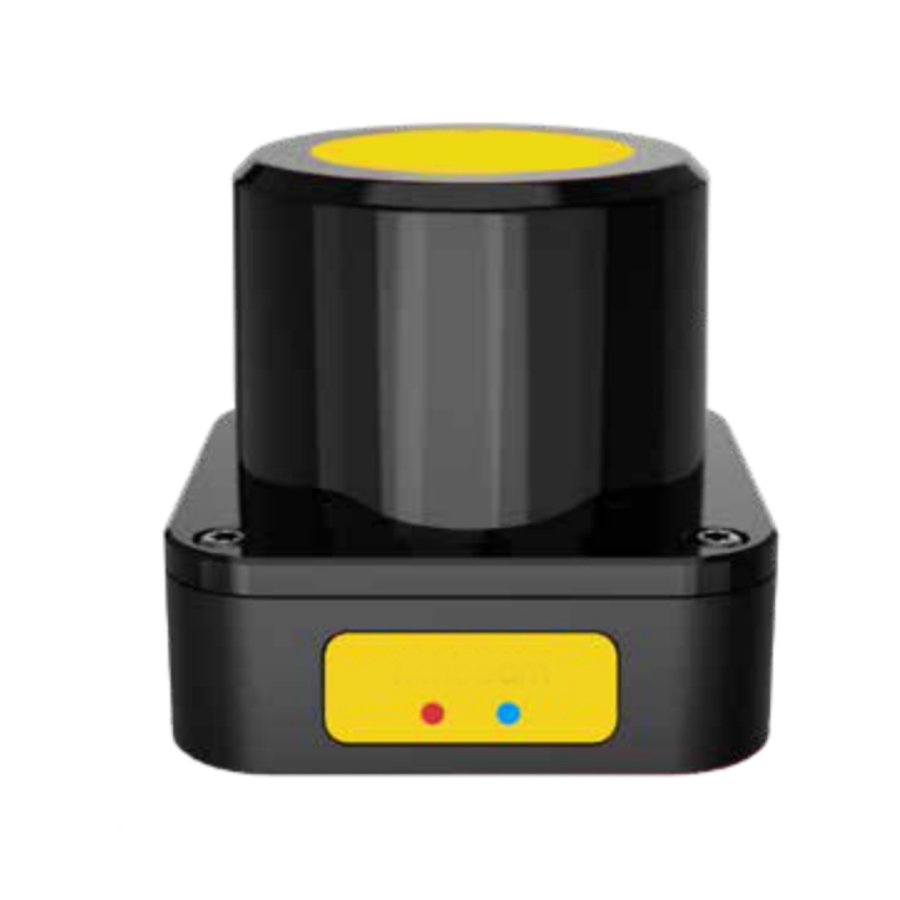
Product Description
The DLD30T-5N is an economical industrial laser ranging sensor designed for precise, non-contact distance measurement in demanding environments. It features high performance with adjustable sampling frequencies from 3-30Hz, robust IP67 protection against water and dust, and Class 1 laser safety. With detection ranges up to 20m (under 70% reflectivity), it supports RS485/Modbus protocol for seamless integration with PLC systems and other industrial equipment.
Product Introduction
The DLD30T-5N series industrial laser ranging sensor offers a cost-effective solution for high-precision distance measurement. It controls the laser ranging module at frequencies between 3-30Hz, making it versatile for various automation needs. Key features include a compact design (55x55x51mm), lightweight construction (85g), wide operating temperature range (-25°C to 60°C), and strong ambient light resistance (up to 20K lux). It provides reliable performance with response times as low as 33ms at 30Hz, adjustable minimum response from 0-1000ms, and laser wavelength of 905nm. This sensor is ideal for industrial automation, robotics, AGV/AMR systems, gate controls, and parking facilities, ensuring accurate ranging even in challenging conditions like varying reflectivity or daylight exposure.
Product Application Scenarios
- Industrial Automation: Used for precise positioning, object detection, and process monitoring in manufacturing lines.
- Robotics: Enables robots to measure distances for navigation, obstacle avoidance, and manipulation tasks.
- AGV/AMR Systems: Supports autonomous guided vehicles and mobile robots in warehouses for path planning and collision prevention.
- Gate Systems: Applied in access control barriers, such as toll gates or security gates, for vehicle or object detection.
- Parking Garages: Facilitates level monitoring, vehicle positioning, and space management in multi-level parking structures.
Product Working Principle
The DLD30T-5N operates on the Time-of-Flight (ToF) laser ranging principle. It emits a pulsed laser beam (905nm wavelength, Class 1 safe) toward the target. The sensor measures the time it takes for the light to reflect back from the target and return to the receiver. Distance is calculated using the formula: Distance = (Speed of Light × Time of Flight) / 2. This method ensures high accuracy across different reflectivities (e.g., ≥20m for 70% reflectivity targets, ≥8m for 10% reflectivity, and ≥4m under 20K lux daylight). The sensor supports RS485/Modbus communication for data transmission, with configurable baud rates (4.8Kbps to 115.2Kbps) and USB-to-serial conversion via FT232. It also allows zone segmentation (16 segments × 4 groups in 4 areas) and outputs via 48 PNP/NPN channels (including 3 for laser power and 1 for fault indication), enabling real-time integration with control systems.