How to Choose the Right Safety Light Curtain for Automatic Palletizing Systems?
1. Overview: The Kinetic Risks of High-Speed Palletizers
Modern automatic palletizing systems are heavy-duty engineering marvels. A standard industrial palletizer can weigh anywhere from 2,000 kg to 8,000 kg, drawing 5-15 kW of power. When handling packages (from 5 kg bags to 30 kg cartons) at stacking speeds of 10 to 60 bags per minute, the robotic arm generates massive kinetic energy.
The core engineering challenge is not just maintaining the ±2 mm positioning accuracy, but ensuring that operators, maintenance crew, or forklift drivers do not accidentally enter the robotic arm's operating radius. A collision with a palletizing robot operating at full load is catastrophic. Therefore, implementing a fault-tolerant industrial sensor safety system is a mandatory compliance requirement for global factory floors.
2. Palletizing Workflow & Hazard Zones
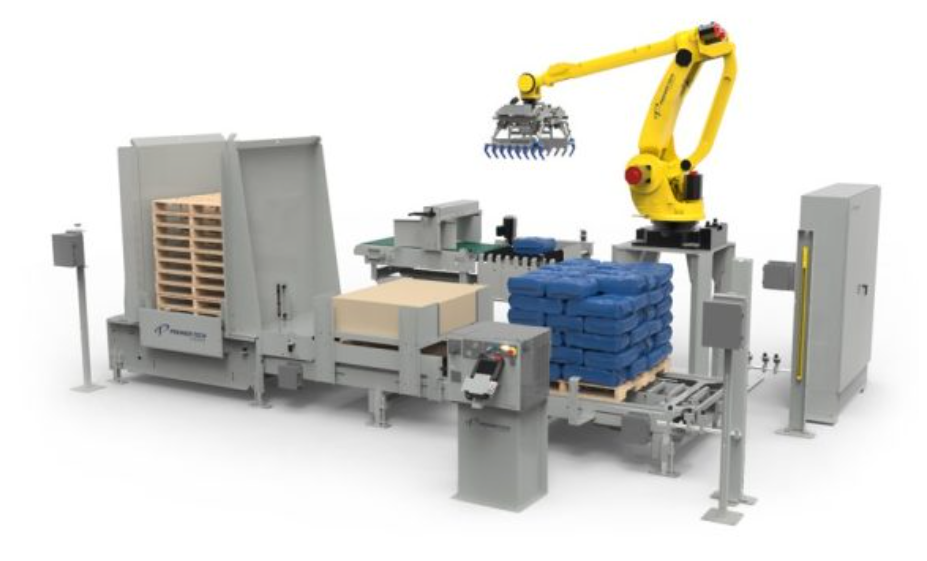
To understand where to deploy safety sensors, we must first break down the machine's automated workflow:
- Packaging Infeed: Goods are conveyed to a positioning device.
- Pallet Supply: Empty pallets (typically 800×1200 mm or 1000×1200 mm) are fed into the stacking station.
- Robotic Palletizing: The mechanical arm grips and stacks the products up to target heights of 1200-2000 mm.
- Output: The finished pallet is transported to a stretch wrapper or warehouse.
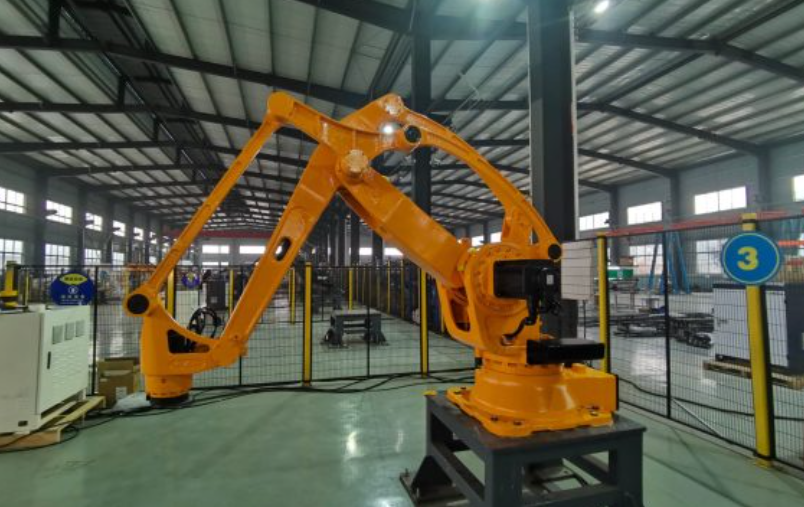
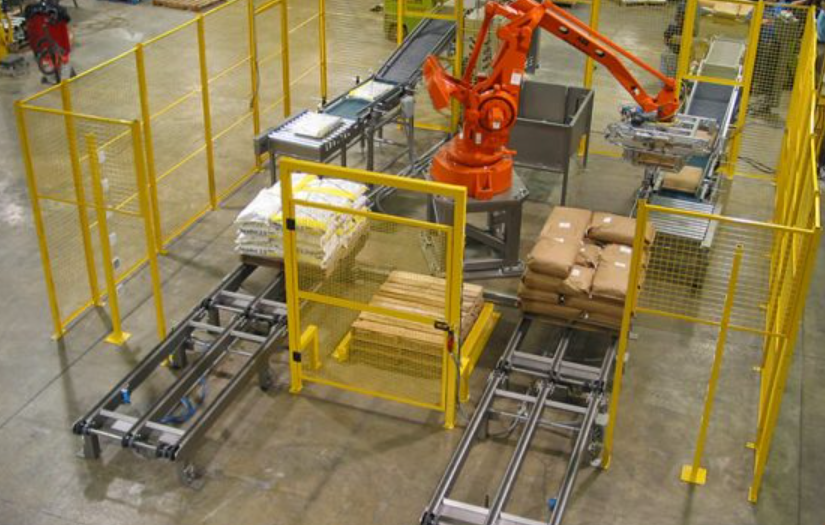
The Blind Spot: The primary hazard zone is the open area where forklifts extract the finished pallets or where operators enter to clear occasional packaging jams. Physical fencing alone is inefficient for areas requiring constant material flow. This is where optoelectronic guarding becomes critical.
3. Primary Protection: DQSA Area Safety Light Curtains
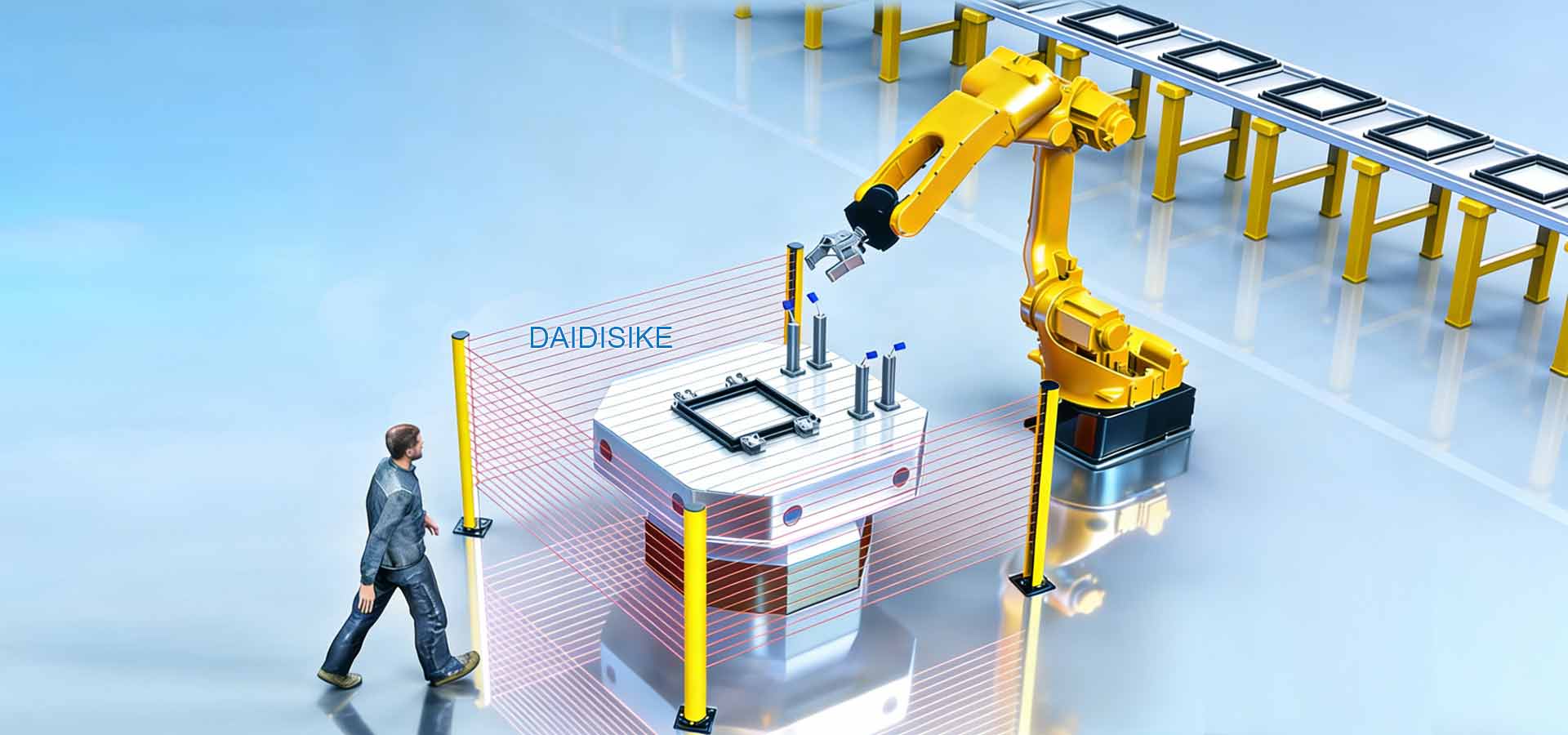
For the majority of heavy-duty palletizers, the standard and most reliable engineering recommendation is creating a virtual perimeter using Area Safety Protection Light Curtains. Our recommended setup utilizes floor-stand models with through-beam infrared technology.
If a worker mistakenly crosses the infrared barrier into the hazardous area, the light curtain immediately triggers an alarm and sends a stop signal to the PLC, cutting off the robot's motion instantly.
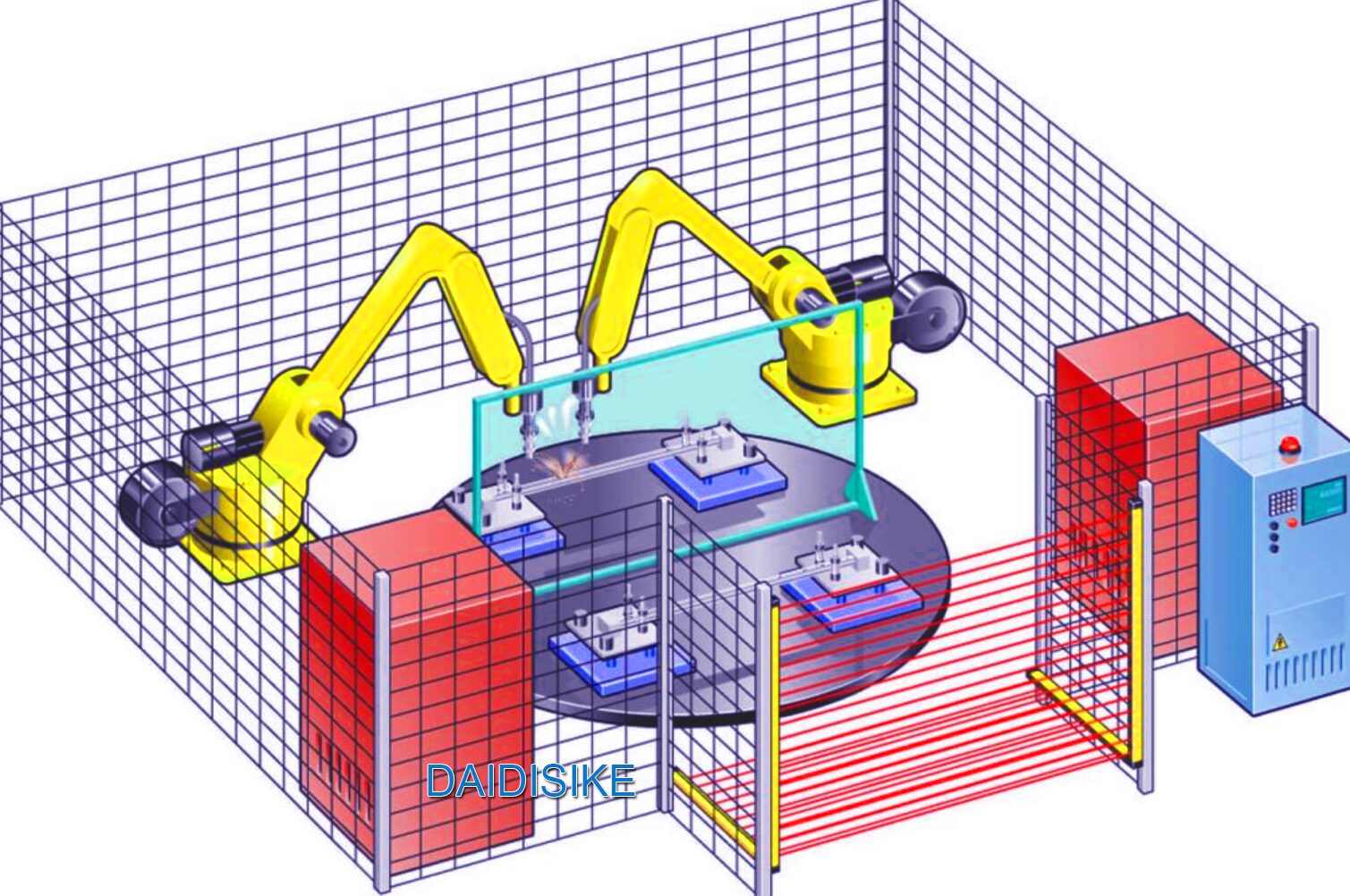
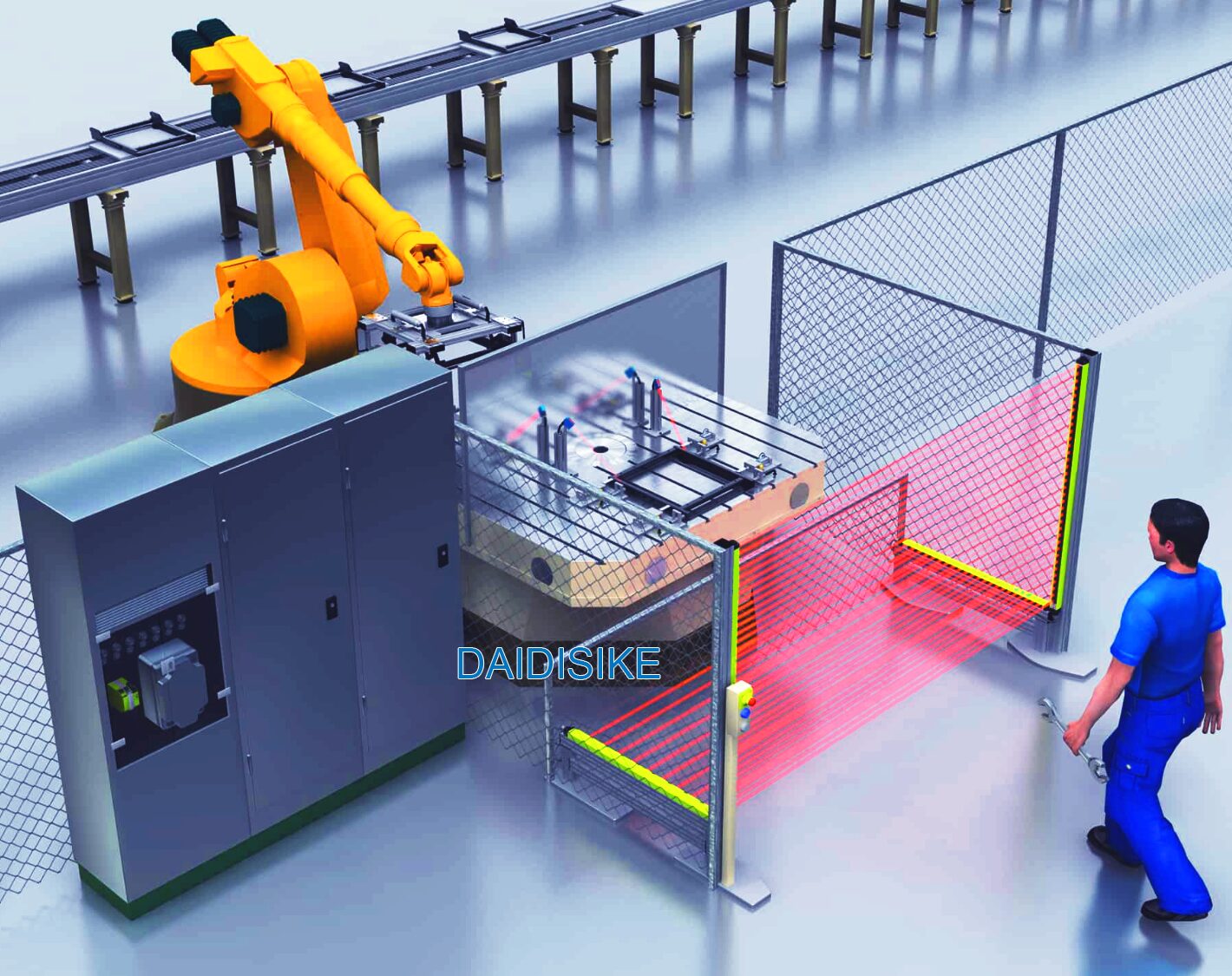
Why engineers prefer the DQSA Series:
- Floor-Stand Design: Easy to mount firmly to the concrete floor without welding to the machine frame, isolating the sensor from the palletizer's mechanical vibrations.
- Through-Beam Reliability: Highly resistant to factory dust, optical interference, and ambient light, ensuring zero false triggers.
- Instant Response: Millisecond-level reaction time meets strict CE safety standards.
Learn more about technical dimensions and wiring configurations:
→ View the DQSA Area Safety Protection Light Curtain Specs
4. Flexible Alternative: Safety Laser Scanners
In certain layout scenarios — such as end-of-line packaging where AGVs (Automated Guided Vehicles) and manual operators share a highly dynamic workspace — installing fixed floor stands might impede traffic. In these cases, an excellent alternative is the Industrial Safety Laser Scanner.
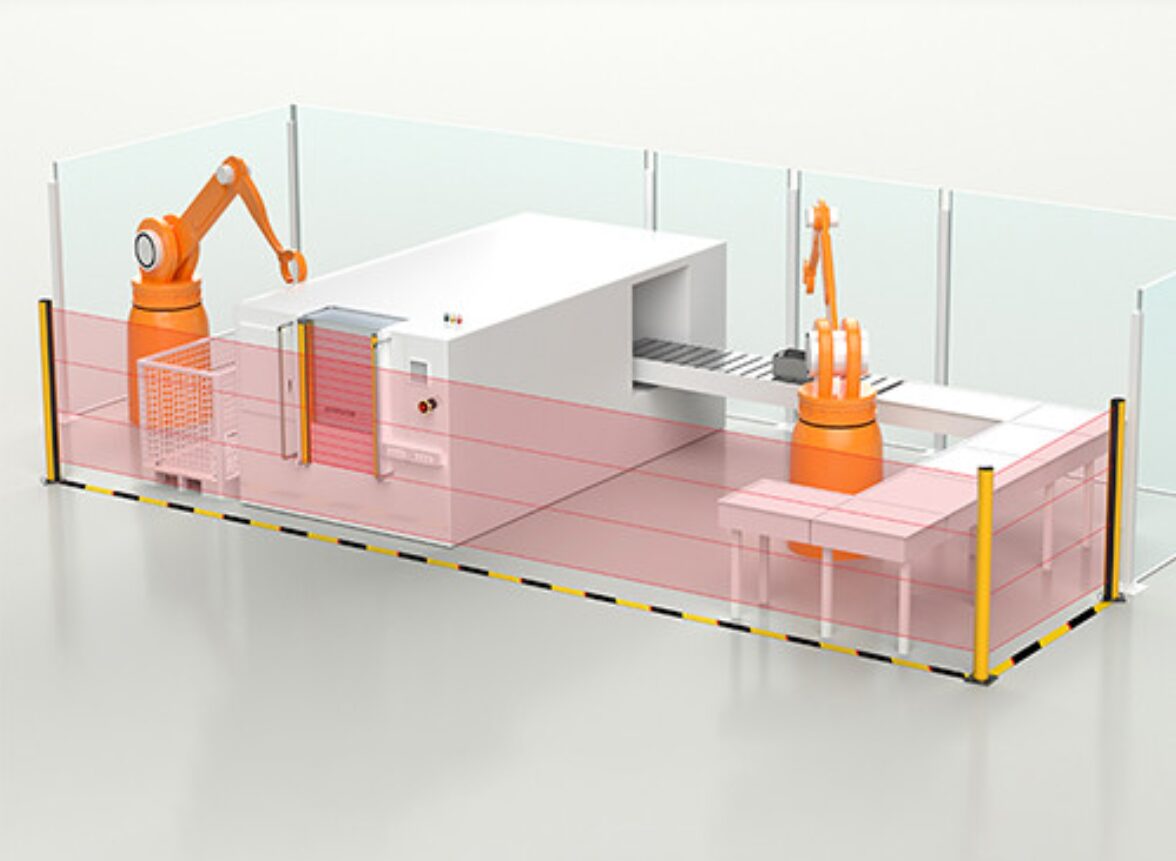
Instead of a linear barrier, a LiDAR scanner sweeps a 270° plane. Engineers can connect the scanner to a PC and draw customized protection zones. You can configure a Warning Zone (triggers a flashing light/buzzer if someone approaches) and a Stop Zone (instantly shuts down the palletizer if crossed).
Ideal for complex layouts without physical barriers:
→ Explore the 14-Meter Range Safety Laser Scanner
5. Engineering Notes: Safety Distance & Response Time
You cannot simply bolt a light curtain next to a robotic arm. When integrating the DQSA series or our Laser Scanners, the installation distance must account for the machine's stopping inertia. According to ISO 13855 standards, the minimum safety distance (S) is calculated as:
S = (K × T) + C
- K: Approach speed of the human body (typically 1600 mm/s for walking).
- T: Total response time = (Sensor response time) + (PLC processing time) + (Robot mechanical braking time).
- C: Intrusion distance (depends on the resolution of the light curtain).
* DAIDISIKE's engineering team provides full calculation support during your system integration phase to ensure CE compliance.
6. Real-World Case Studies
Our safety sensors are securing high-speed palletizing lines across various global industries:
Feed Mill (Thailand)
Machine: 25 bags/min.
Integrated with existing packaging lines. Customizable stacking patterns accommodated 10 kg and 15 kg feed bags, while our sensors ensured continuous, safe operation, helping to keep the line running productively.
Biomass Pellet Plant
Machine: IoT Connected, 45 bags/min.
Handling heavy chemical cartons. Real-time safety monitoring fully complied with EU standards. The remote troubleshooting capabilities helped reduce machine downtime.
Chemical Company
Machine: IoT Connected, 45 bags/min.
Deployed for high-throughput chemical box stacking. EU CE certified safety protection and real-time monitoring helped decrease operational downtime.