
DDK Series Long-Range Laser Distance Sensor
(Phase-Shift Measurement)
High-precision, non-contact distance measurement from 0.1m to 50m with 1mm resolution. Features multi-output options (RS485, Analog, NPN/PNP), IP67 protection, and easy on-device setup—no PC required.
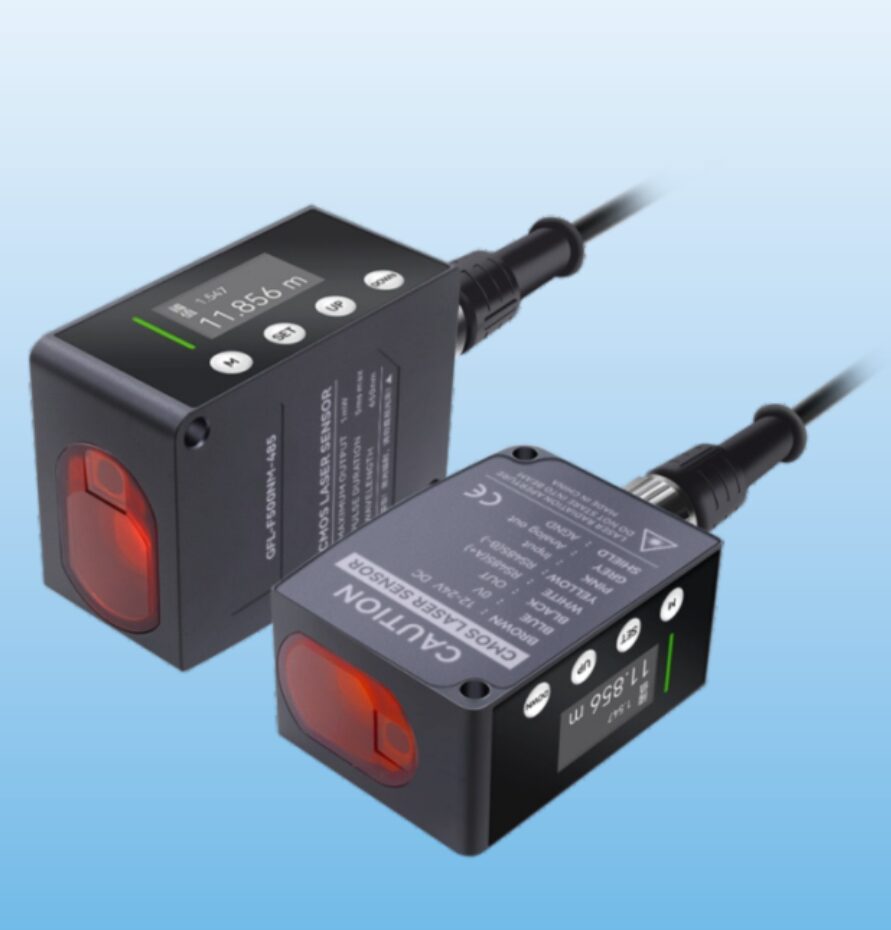
1. Key Parameters
Measurement Range
0.1 – 50 m (model dependent)
Resolution
1 mm
Accuracy
±(2 mm + 0.01% of distance)
Laser Class
IEC 60825 Class II, <1 mW
Output Types
NPN/PNP + Analog + RS485
Protection
IP67, aluminum housing
2. Detailed Specifications
| Measurement Range | 0.1–1m / 2m / 5m / 10m / 20m / 50m |
| Resolution | 1 mm |
| Measurement Error | ±(2mm + d×0.01%) ★ |
| Laser Type | Class II Red Semiconductor Laser, 655±10nm, <1mW |
| Power Supply | DC 12–24V ±10% (Ripple ≤10%) |
| Current Consumption | ≤50mA @24V |
| Digital Output | NPN / PNP open collector, max 50mA, ≤30V |
| Analog Output | 0–5V (alarm: 5.2V) or 4–20mA (alarm: 0mA) |
| RS485 | Modbus RTU, 9600–256000 bps, address 1-255 |
| Response Time | 50–200 ms |
| Protection | Reverse polarity, short-circuit (auto-recovery) |
| Ingress Protection | IP67 |
| Operating Temperature | −10°C to +45°C (no condensation) |
| Housing Material | Aluminum |
| Cable | 2m, 8-core shielded cable |
| Weight | Approx. 150g |
★ Error may increase in strong sunlight, low-reflectivity targets, or extreme temperature fluctuations. Use a reflector for optimal performance.
3. Wiring Diagrams
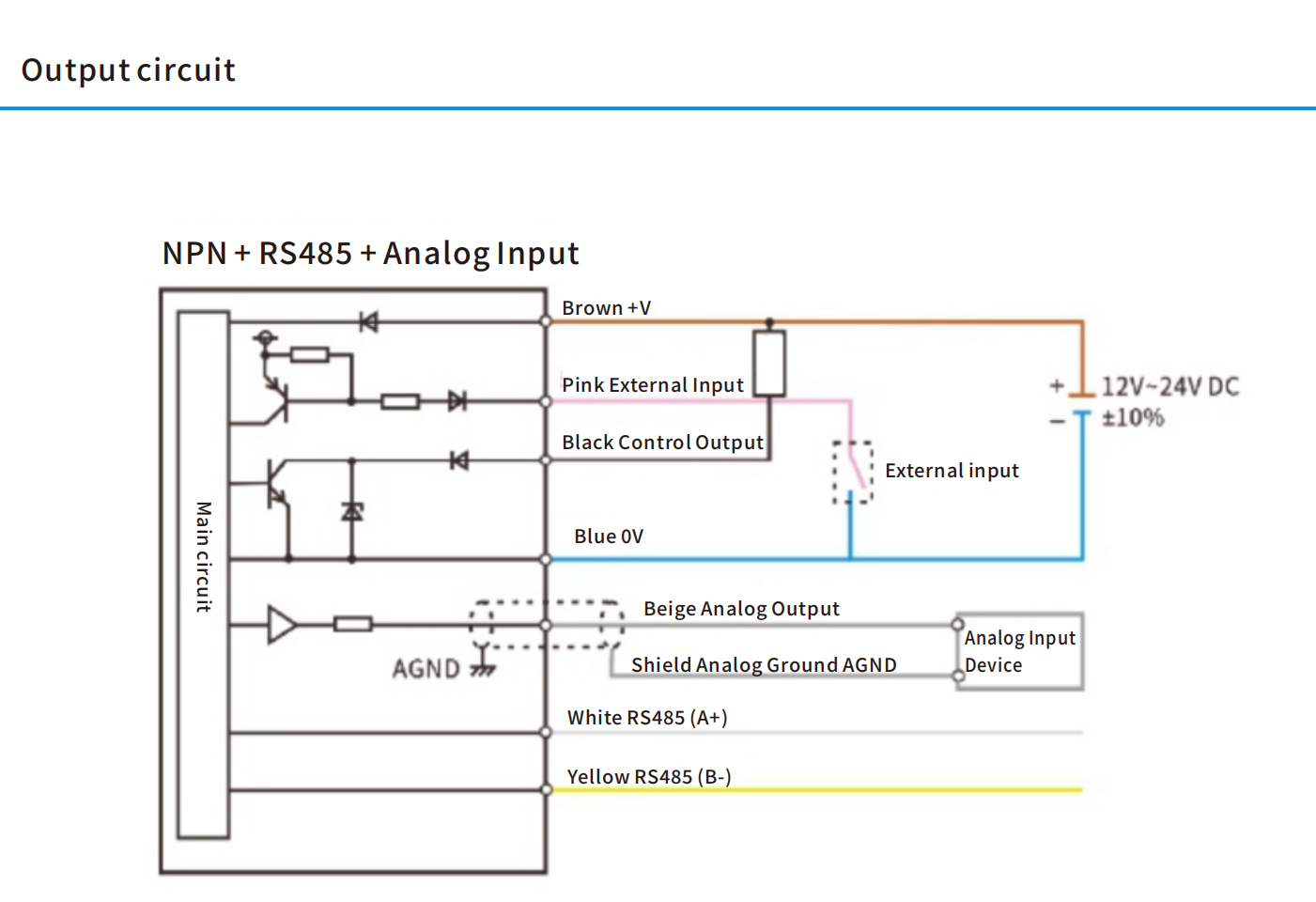
NPN + Analog (4-20mA) + RS485 Wiring

PNP + Analog (0-5V) + RS485 Wiring
4. Mechanical Dimensions
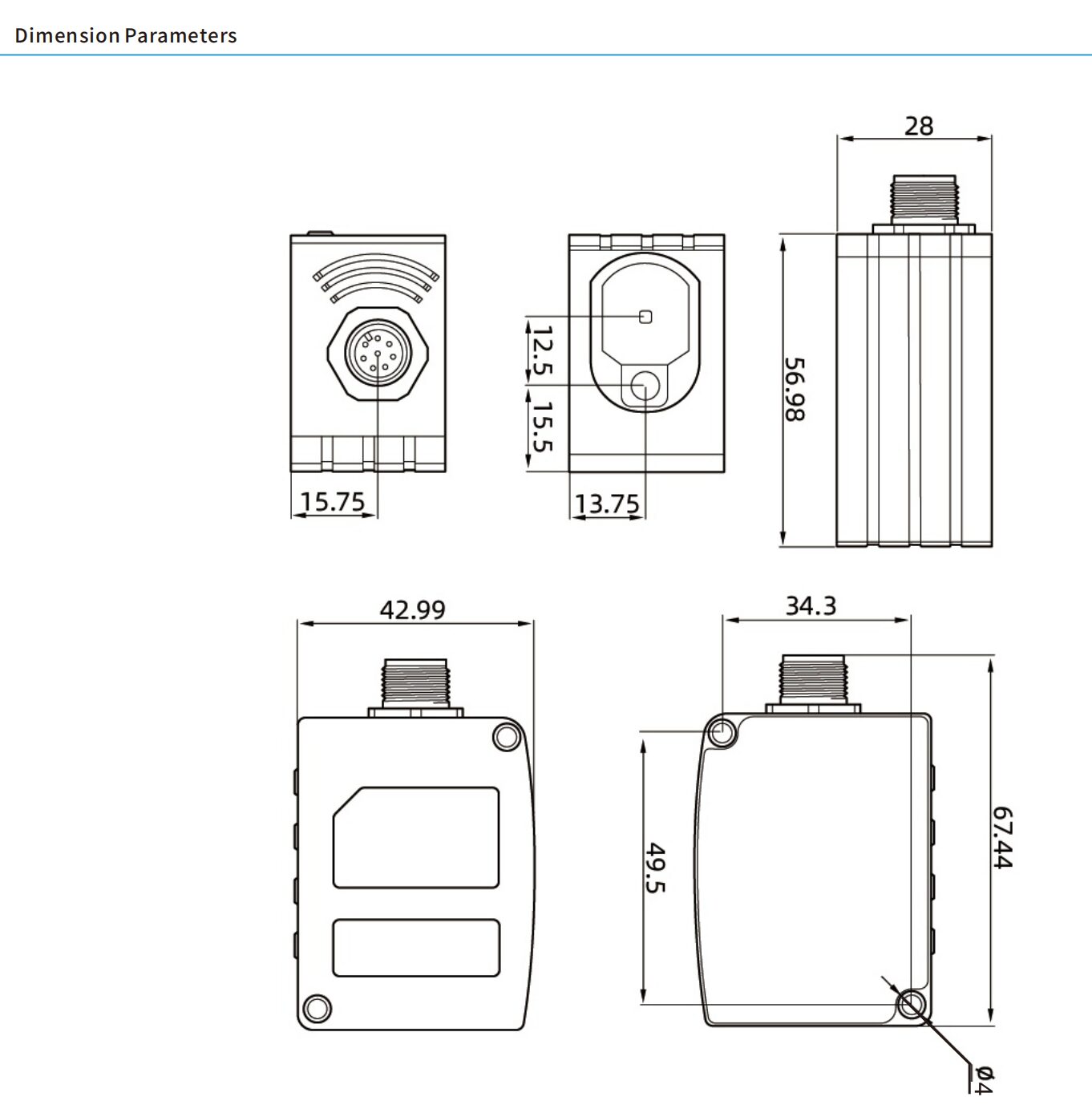
Dimensions: Compact aluminum housing with M12-style mounting
5. More Resources & Applications
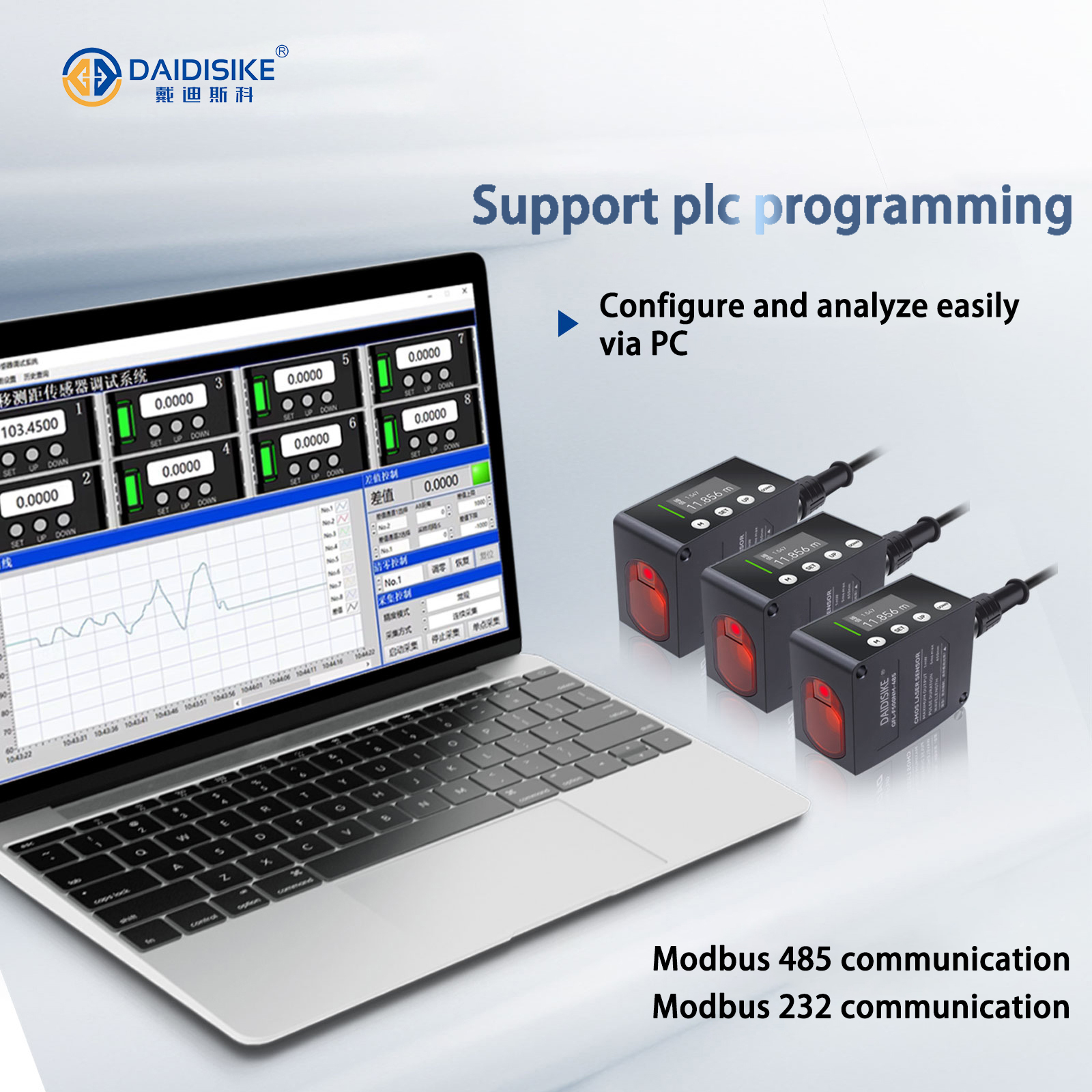
Typical Use Cases
AGV navigation, level monitoring, robotics positioning
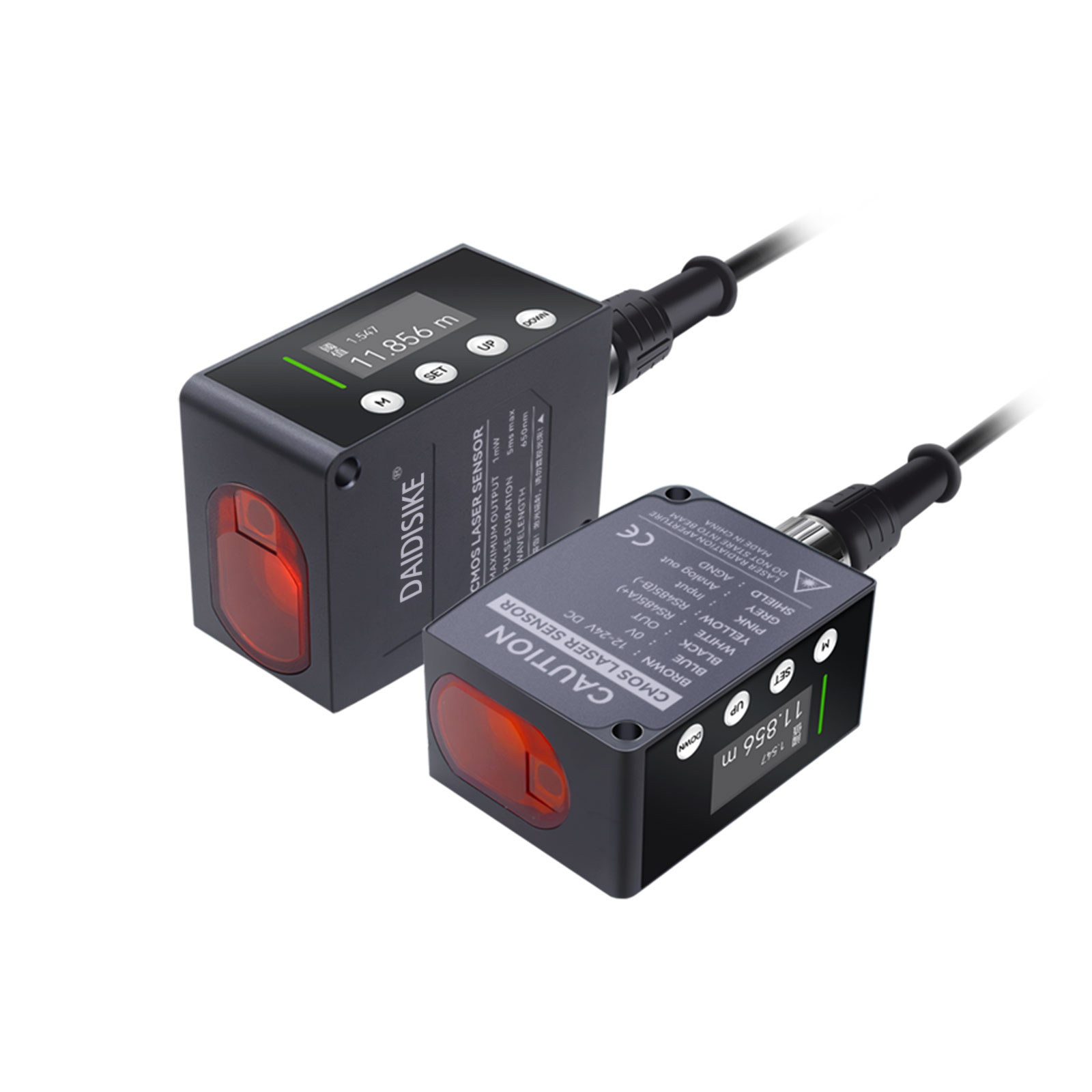
Model Selection
NPN/PNP + Analog + RS485 variants for all ranges
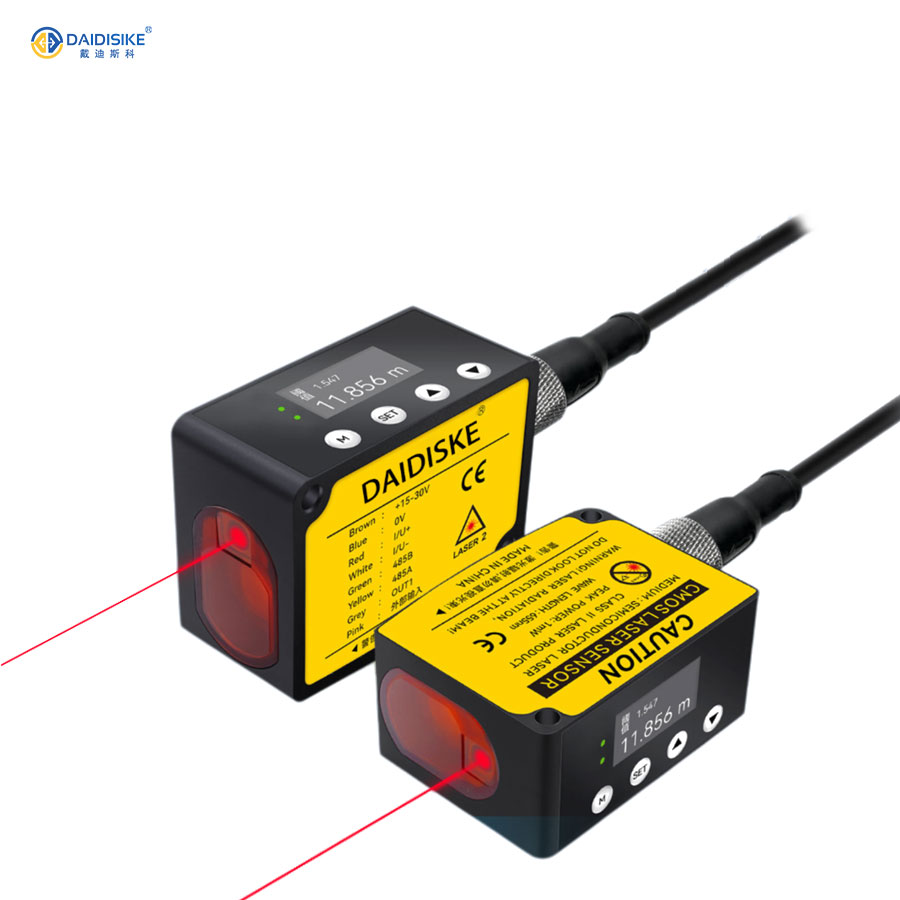
Field Installation
Robust performance in dusty, wet environments
Frequently Asked Questions
What is the measurement range and accuracy of the DDK laser distance sensor?
The DDK Series measures non-contact from 0.1 m up to 50 m depending on the model (0.1–1 m, 2 m, 5 m, 10 m, 20 m or 50 m). Resolution is 1 mm and accuracy is ±(2 mm + 0.01% of distance). Strong sunlight, low-reflectivity targets or large temperature swings can increase error, so a reflector is recommended for the longest ranges.
How does phase-shift laser ranging differ from time-of-flight?
Phase-shift measurement, used by the DDK Series, modulates a continuous Class II red laser beam and compares the phase of the returned signal to derive distance. It delivers high 1 mm resolution at short to medium range, which is why the DDK suits precise level monitoring and positioning rather than the very long outdoor ranges typical of pure time-of-flight LiDAR.
What output options does the DDK sensor support for PLC integration?
Each unit provides NPN or PNP open-collector digital output (max 50 mA, ≤30 V), an analog output of 0–5 V or 4–20 mA with a dedicated alarm level, and RS485 Modbus RTU (9600–256000 bps, address 1–255). This lets you wire it to almost any PLC, HMI or controller and read live distance values over the bus.
Is the DDK laser sensor suitable for outdoor or harsh environments?
Yes. The DDK has an IP67-rated aluminum housing with reverse-polarity and short-circuit protection (auto-recovery), and an operating range of −10 °C to +45 °C without condensation. It performs reliably in dusty and wet conditions, making it suitable for AGV navigation, tank and silo level monitoring, and robotics positioning.
What power supply and wiring does the DDK sensor need?
It runs on DC 12–24 V (±10%, ripple ≤10%) and draws ≤50 mA at 24 V. Connection is via a 2 m, 8-core shielded cable. Two reference wiring diagrams are supplied: NPN + 4–20 mA analog + RS485, and PNP + 0–5 V analog + RS485. Use the shielded cable correctly grounded to minimize electrical noise on the analog and RS485 lines.
Specs reviewed by Engineer Cai, Senior Application Engineer. See certificates.