
JNS-Q120 Pneumatic / Rebound / Digital-Display Contact Displacement Grating Sensor
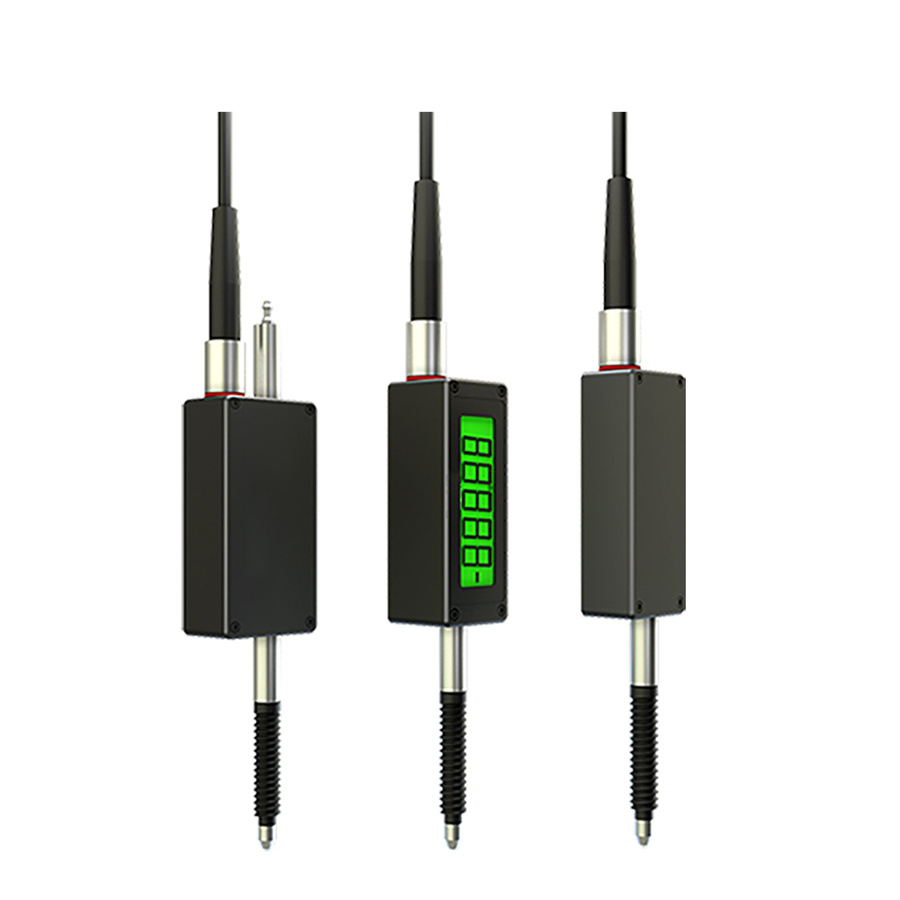
The contact-type grating displacement sensor combines grating optical principles with a contact probe design to detect changes in object displacement. It achieves high-precision measurement through moiré-fringe interference on the grating scale, with resolutions reaching micrometer or even nanometer levels. The sensor consists of a reading head, scale body and contact probe — when the probe touches the workpiece, displacement is converted into optical signals for output. It offers strong anti-interference and high stability, ideal for harsh industrial environments.
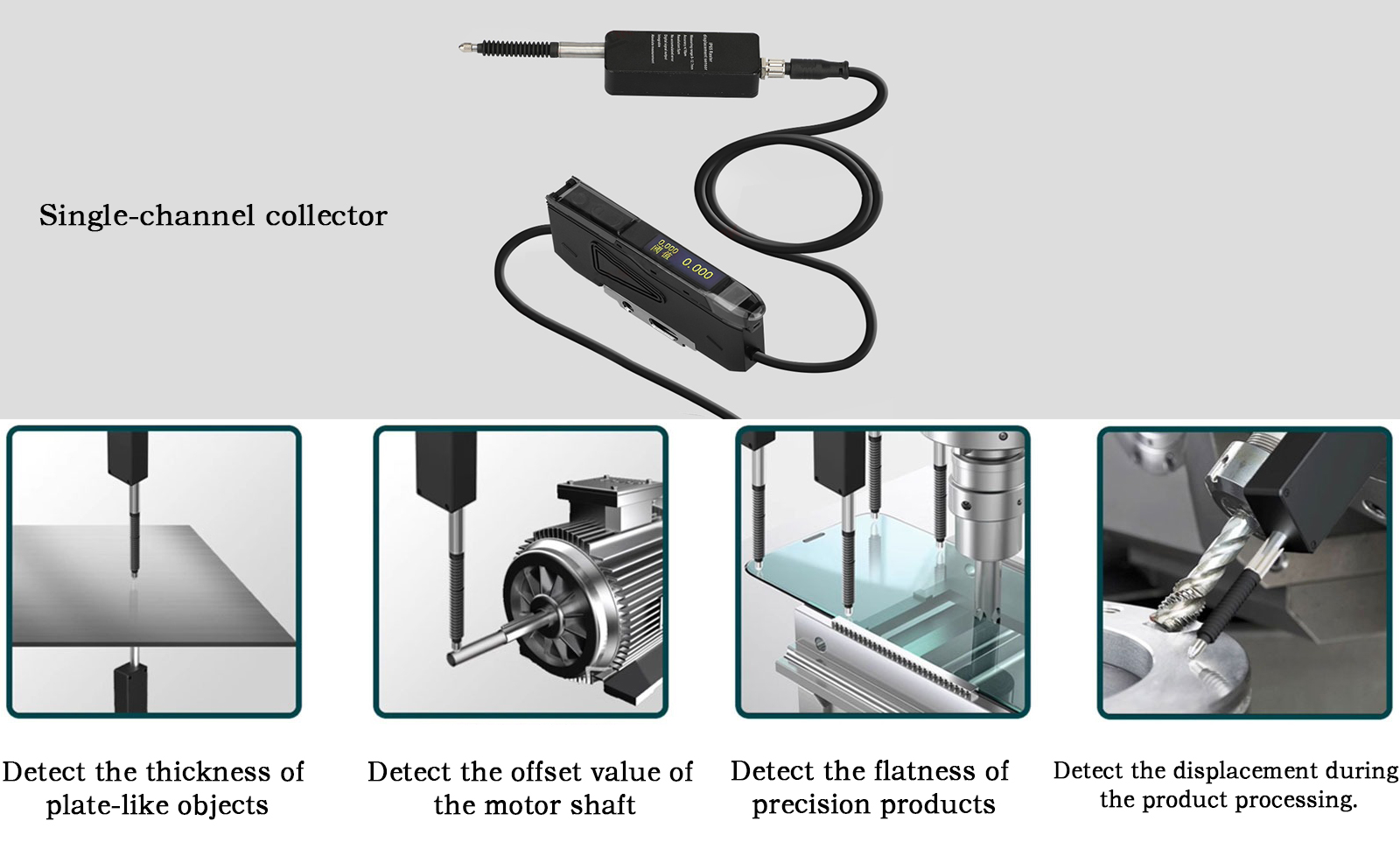
Applications: precision machining (tool positioning, workpiece measurement on CNC machines), metrology (CMM 3D dimensional inspection), semiconductor manufacturing (wafer alignment, thickness monitoring), automotive (part-deformation detection), and material-testing machines (minute tension / compression displacement monitoring for quality control).
Product Features
Multi-modal Measurement
Supports real-time displacement, vibration, thickness and runout detection, with extreme-value (MAX / MIN) and difference (MAX − MIN) measurement modes.
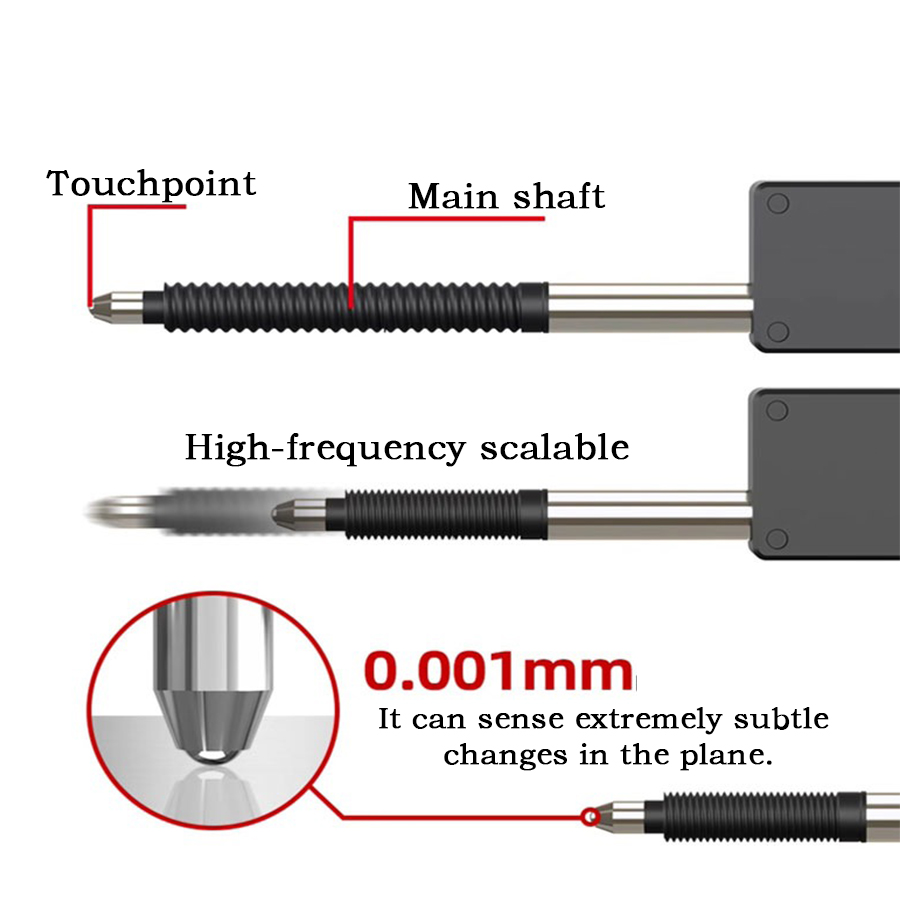
Resolution ranges from 0.2 μm (high-precision ten-thousandth) to 5 μm (basic), with 1 μm repeatability on the contact type.
Integrated Design
Integrated digital-display structure: display screen, key controls and sensor body in one unit, showing real-time data in micrometers (μm).
Multi-function keys support tolerance setting (upper / lower limit), correction-value calibration and measurement-mode switching (real-time / extreme value).
Industrial-grade Durability
Protection rating IP65 (dust & waterproof), working temperature −10 °C to +60 °C.
The pneumatic model is compatible with Φ4 air tubes, working pressure 0.16 – 0.2 MPa, with strong dust-interference immunity.
Flexible Interfaces & Protocols
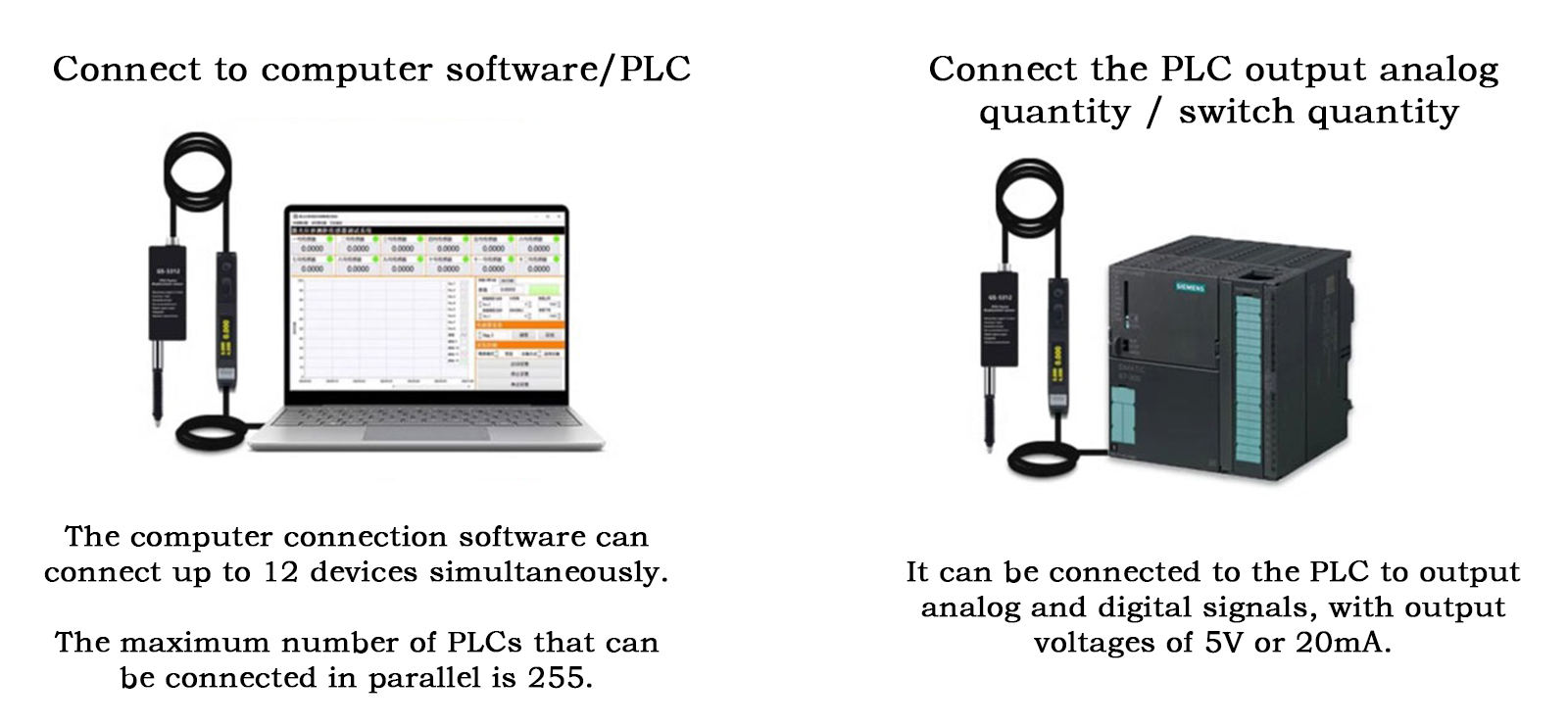
- Outputs: RS232 / RS485 (Modbus RTU protocol); IO out-of-tolerance alarm signal (O1 / O2 pins).
- Power supply: grating type DC 5 V (< 50 mA), contact type DC 24 V.
- Installation: standard DIN rail (contact type) or bolt fixation (grating type).
Product Working Principle
Optical Measurement System (Grating Type)
Moiré-fringe interference: a grating ruler paired with an image sensor — relative grating displacement generates changes in the moiré fringes.
Signal conversion: fringe motion is converted into an electrical signal; the processor computes the displacement (accuracy 0.2 μm). A 16-bit ADC digitizes the value and transmits it via Modbus RTU at 38400 bps.
Mechanical Contact Measurement (Integrated Type)
Probe displacement transmission: when the probe contacts the workpiece, mechanical displacement is generated and converted into linear motion by the internal spring blade or pneumatic push device.
Electrical signal generation: displacement changes trigger Hall elements or strain gauges, outputting a proportional voltage / current signal.
Real-time processing: the built-in MCU filters and linearizes the signal, then outputs the digital value to the display screen and the communication interface.
Intelligent Functions
Extreme-value detection: continuously sample and compare peak values; store MAX / MIN to registers 2000H / 3000H.
Tolerance alarm: when out-of-tolerance, a switching signal is output through the yellow (O1) / green (O2) pins.
Application Scenarios
Precision Manufacturing & Inspection
- Semiconductor / optical components: high-precision ten-thousandth sensors (0.2 μm) for wafer thickness and lens surface-shape detection.
- Machining: thousandth / hundredth-grade sensors (1 – 5 μm) monitor tool wear and part circular runout on machine tools.
Industrial Automation Control
- Online sorting: the integrated contact sensor works with IO signals to trigger sorting mechanisms in real time (e.g. rejection of out-of-tolerance workpieces).
- Pneumatic production lines: pneumatic displacement sensors position cylinder strokes and detect assembly clearances in dusty environments.
Research & Quality Control
- Material-deformation research: long-range type (25.4 mm) for monitoring tensile / compressive deformation.
- Dynamic vibration analysis: 50 ms high-speed sampling captures peak vibrations and computes amplitude / frequency.
Special-environment Adaptation
- Moisture / oil-stained scenarios: IP65 version suits automotive-parts inspection and hydraulic-system monitoring.
- Compact spaces: ultra-thin integrated design (21 mm thickness) embeds inside equipment for real-time displacement feedback.
Series & Model Specifications
All three series (B / Q / W) share an identical electrical & optical platform — they differ in mounting / outline only. The same spec table applies; switch the tab to change the model-prefix display.
| Parameter | JNS-Q120A | JNS-Q250A | JNS-Q120S | JNS-Q120Q | JNS-Q120A24 | JNS-Q250A24 | JNS-Q120S24 | JNS-Q120Q24 |
|---|---|---|---|---|---|---|---|---|
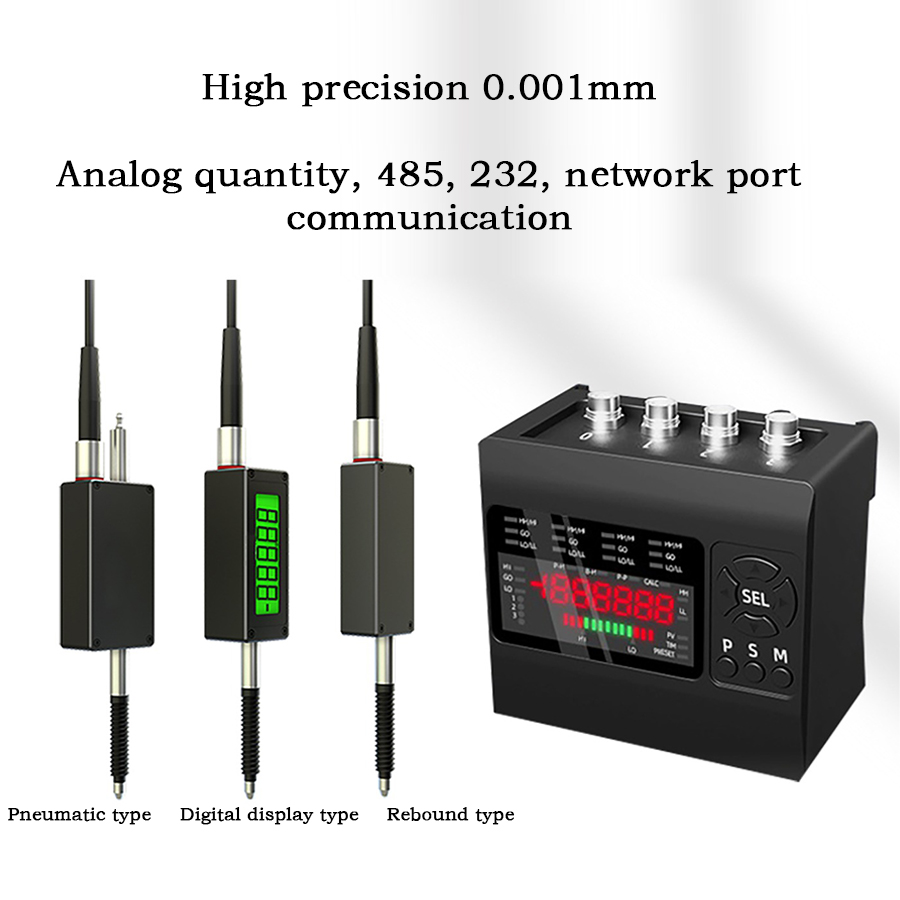
| Appearance | Rebound Type | Rebound Type | Digital Display Type | Pneumatic Type | Rebound Type | Rebound Type | Digital Display Type | Rebound Type |
| Measuring Range | 12.7 mm | 25.4 mm | 12.7 mm | 12.7 mm | 12.7 mm | 25.4 mm | 12.7 mm | 12.7 mm |
| Accuracy | ≤ 10 μm (percentage) ± 2 μm (thousandth) ≤ 2 μm (ten-thousandth) | ≤ 10 μm (percentage) ± 3 μm (thousandth) ≤ 3 μm (ten-thousandth) | ≤ 10 μm (percentage) ± 2 μm (thousandth) ≤ 2 μm (ten-thousandth) | ≤ 10 μm (percentage) ± 2 μm (thousandth) ≤ 2 μm (ten-thousandth) | ≤ 10 μm (percentage) ± 2 μm (thousandth) ≤ 2 μm (ten-thousandth) | ≤ 10 μm (percentage) ± 3 μm (thousandth) ≤ 3 μm (ten-thousandth) | ≤ 10 μm (percentage) ± 2 μm (thousandth) ≤ 2 μm (ten-thousandth) | ≤ 10 μm (percentage) ± 2 μm (thousandth) ≤ 2 μm (ten-thousandth) |
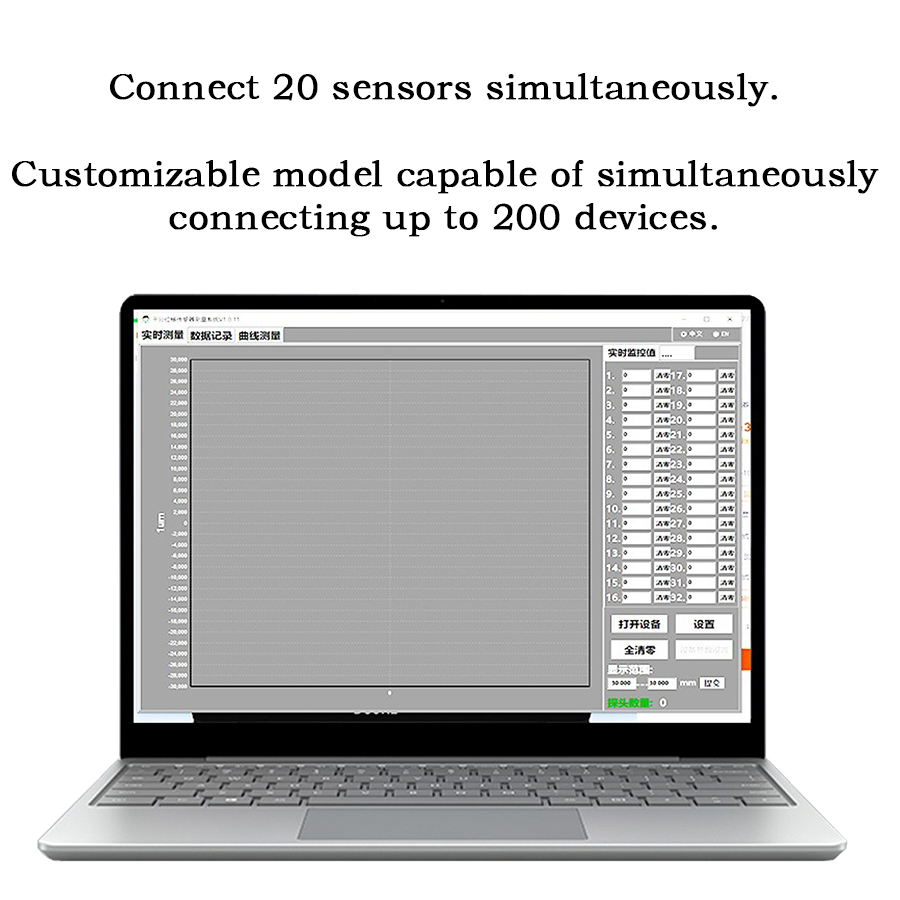
| Signal Output | RS485 (single) | RS485 (single) | RS485 (single) | RS485 (single) | RS232 / RS485 (up to 255 devices) | RS232 / RS485 (up to 255 devices) | RS232 / RS485 (up to 255 devices) | RS232 / RS485 (up to 255 devices) |
| Resolution | 5 μm (percentage) · 1 μm (thousandth) · 0.5 μm (ten-thousandth) | |||||||
| Measurement System | Grating absolute encoder — absolute measurement (no tracking error) | |||||||
| Communication Protocol | Modbus RTU | |||||||
| Response Time | 50 ms | |||||||
| Operating Current | < 50 mA | |||||||
| Power Supply Voltage | 5 V DC | |||||||
| Protection Class | IP65 | |||||||
| Ambient Temperature | −10 °C to +50 °C (no freezing) | |||||||
| Manufacturing Material | Aluminum alloy housing · fluororubber dust cover · hard-alloy contact head | |||||||
Frequently Asked Questions
What is a contact displacement grating sensor and how does the JNS-Q120 work?
It is a linear measurement device that pairs an optical grating scale with a spring-loaded contact probe. As the probe touches a workpiece, the displacement shifts the grating, generating moiré-fringe interference that an image sensor converts to an electrical signal. A 16-bit ADC digitizes the value and a built-in MCU linearizes it, giving the JNS-Q120 down to 0.2 μm resolution for precision dimensional inspection.
What measuring range and resolution does the JNS-Q120 offer?
The JNS series provides 12.7 mm and 25.4 mm measuring ranges to suit both compact gauging and longer material-deformation studies. Resolution spans 0.2 μm on high-precision ten-thousandth models up to 5 μm on basic units, with about 1 μm repeatability on the contact type. This makes it a fit for CMM inspection, tool-wear monitoring and wafer-thickness measurement.
What is the difference between the rebound, pneumatic and digital-display versions?
The rebound (spring) type uses an internal spring blade to return the probe and is the general-purpose choice. The pneumatic type drives the probe with a Φ4 air tube at 0.16–0.2 MPa, giving strong dust immunity for dirty production lines. The digital-display type integrates screen, keys and sensor body in one unit for real-time on-machine readout in micrometers without a separate controller.
What output interfaces and protocols does the JNS-Q120 support?
It outputs RS232 and RS485 using the Modbus RTU protocol at 38400 bps, plus an IO out-of-tolerance alarm on the O1 (yellow) and O2 (green) pins for direct PLC sorting. The grating type runs on DC 5 V (under 50 mA) and the contact type on DC 24 V. MAX/MIN extreme values are stored to registers 2000H/3000H for easy polling.
Is the JNS-Q120 suitable for harsh or oily industrial environments?
Yes. The IP65 housing resists dust and water ingress, and the working temperature range is −10 °C to +60 °C. The pneumatic model adds dust-interference immunity for automotive-parts inspection and hydraulic-system monitoring. Its ultra-thin 21 mm integrated body also embeds inside compact equipment for real-time displacement feedback on machine tools and assembly lines.
Specs reviewed by Engineer Cai, Senior Application Engineer. See certificates.
Safety Light Curtain — Customer Cases
Real installations from DAIDISIKE clients. Click any case to view in full. Filter by scenario to quickly find a similar setup.