
How Does a Pneumatic Air Feeder Work in Punch Press Automation?
Hand-feeding a stamping press is a significant bottleneck: it is slow, inconsistent, and a safety hazard for operators. Automating the feed is the main way to raise daily output while keeping hands out of the die. While servo systems draw much of the attention today, the pneumatic air feeder remains the standard choice on most stamping floors worldwide.
It is rugged, cost-effective, and well proven. But how does an air-driven unit stay synced with a punch press hitting dozens of strokes a minute without causing misfeeds? Let's look at the actual mechanics.
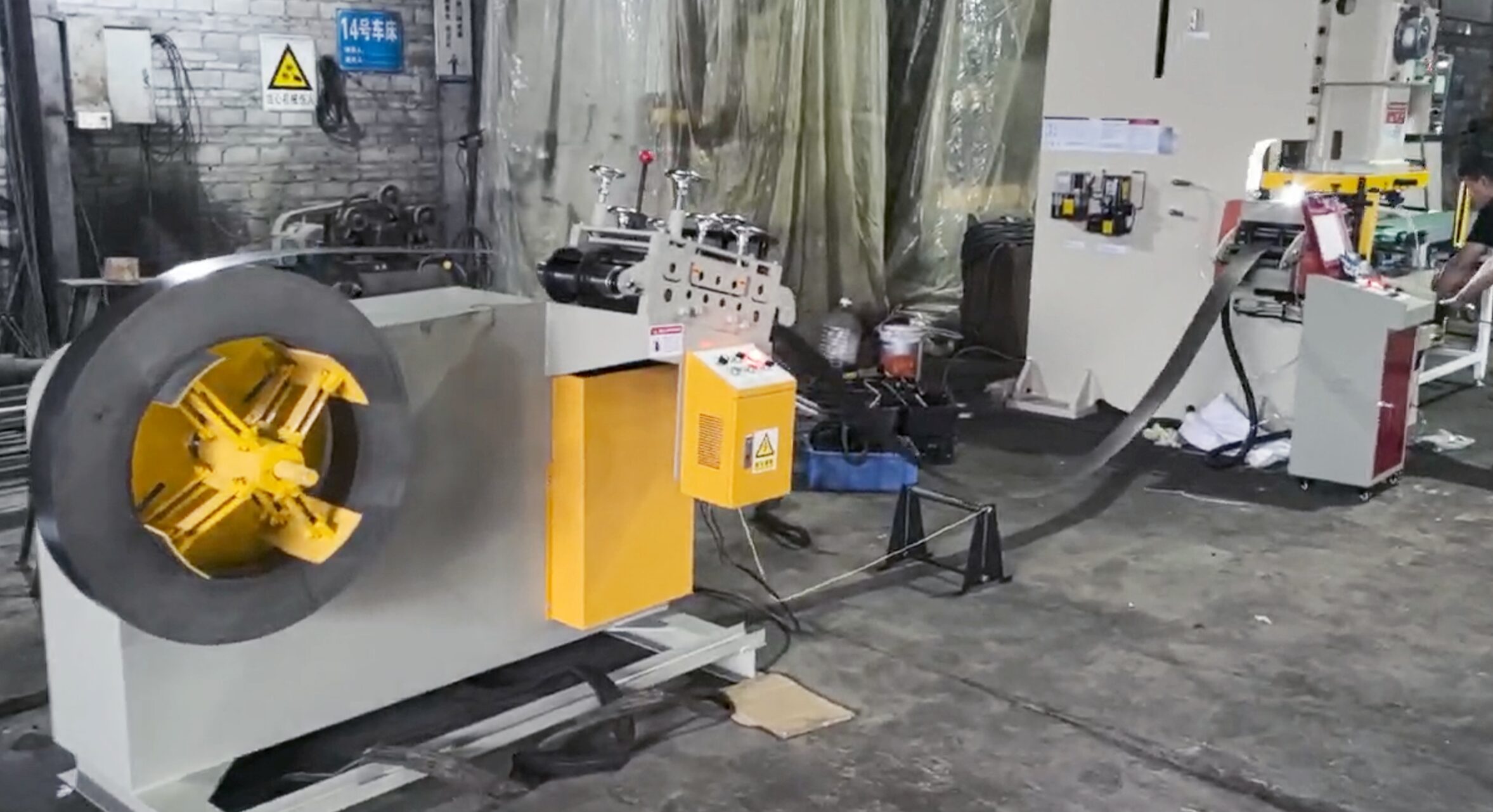
The Core Principle: Driven by Shop Air
You don't need complicated PLCs or sensitive electrical motors here. A pneumatic feeder runs entirely on your standard compressed shop air (usually around 0.4 to 0.6 MPa). It syncs up with the press ram using a mechanical limit valve or a simple solenoid that taps directly into the up-and-down rhythm of your machine.
The entire operation comes down to a lightning-fast, 3-step cycle:
1. The Grip (Clamping)
As the press ram moves upward after a punch, the feeder's air valve opens. Air pressure drives a dedicated cylinder downward, causing the upper and lower splints to clamp tightly onto the metal strip.
2. The Push (Feeding)
With the metal gripped tight, the main horizontal driving cylinder fires. This pushes the whole clamping block forward, advancing the metal strip directly into the die by a highly precise, pre-adjusted pitch.
3. The Release (Resetting)
Right before the die closes to stamp the part, the feeder lets go. The clamp releases, and the main cylinder snaps back to its starting position to grab the next section. This immediate release is crucial — it ensures the metal isn't being pulled or stretched while the stamping die does its work.
Why Shops Still Rely on Air Feeders
Why are we still installing these when high-tech servo feeders exist? Because for many applications, pneumatics simply make more business sense:
- Budget-Friendly: They cost a fraction of what a full servo system does, offering a much faster return on investment.
- Plug-and-Play Setup: No programming required. You can bolt it onto an old mechanical press or a new pneumatic press in a couple of hours.
- Built for Speed: They excel in rapid, continuous stamping runs, especially for thin metal coils, electronic components, and hardware.
- Bulletproof Durability: Since they are purely mechanical and air-driven, they thrive in dirty, high-vibration factory environments that would quickly fry sensitive electronics.
The Hidden Catch: Faster Feeding Means Higher Risk
Here is a critical oversight many plant managers make: Upgrading to an automatic feeder changes your press from a manual single-stroke machine to continuous automatic stamping.
Suddenly, your machine is running nonstop. If a piece of scrap gets stuck, an operator's reflex is often to reach in and grab it. In an automated setup, that is a recipe for disaster. You simply cannot rely on manual emergency stops anymore.
To keep your shop compliant and your workers safe, any automated press line must be guarded by a Type 4 Safety Light Curtain. These industrial sensors create an invisible infrared wall in front of the die area. The millisecond a hand breaks the beam, the press stops instantly.
Need Help Upgrading Your Press Line?
Choosing the right automation gear depends heavily on your material width, thickness, and die setup. At DAIDISIKE, we know press automation.
Whether you need to size a heavy-duty pneumatic feeder to speed up your production, or you need safety light curtains to bring an old punch press up to modern safety standards, our engineering team can map out the exact setup you need. Contact us today to get your line running faster and safer.