
DK-D461 Strip Sensor Wood Detection Troubleshooting
DAIDISIKE Technical Solution Center
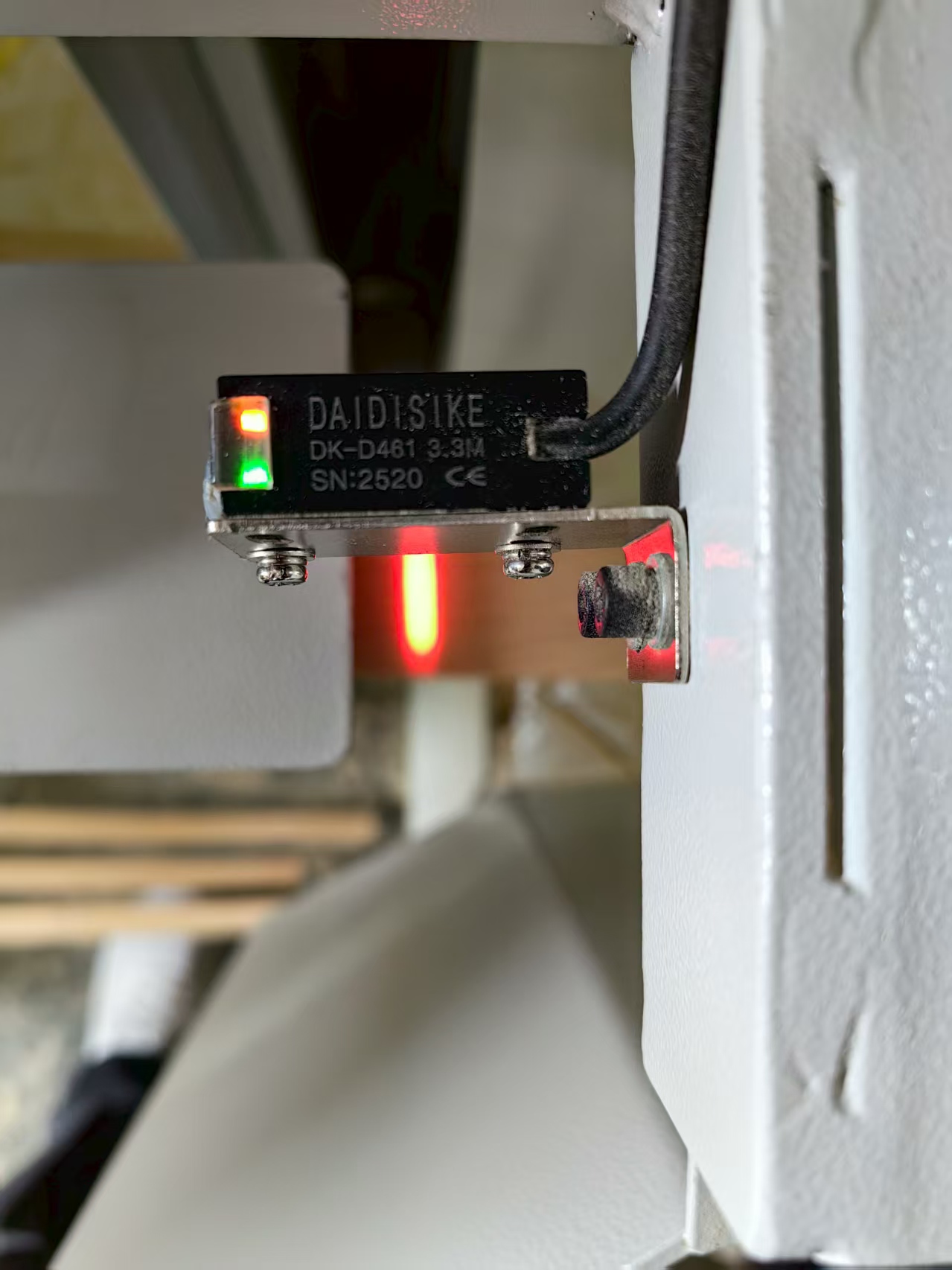
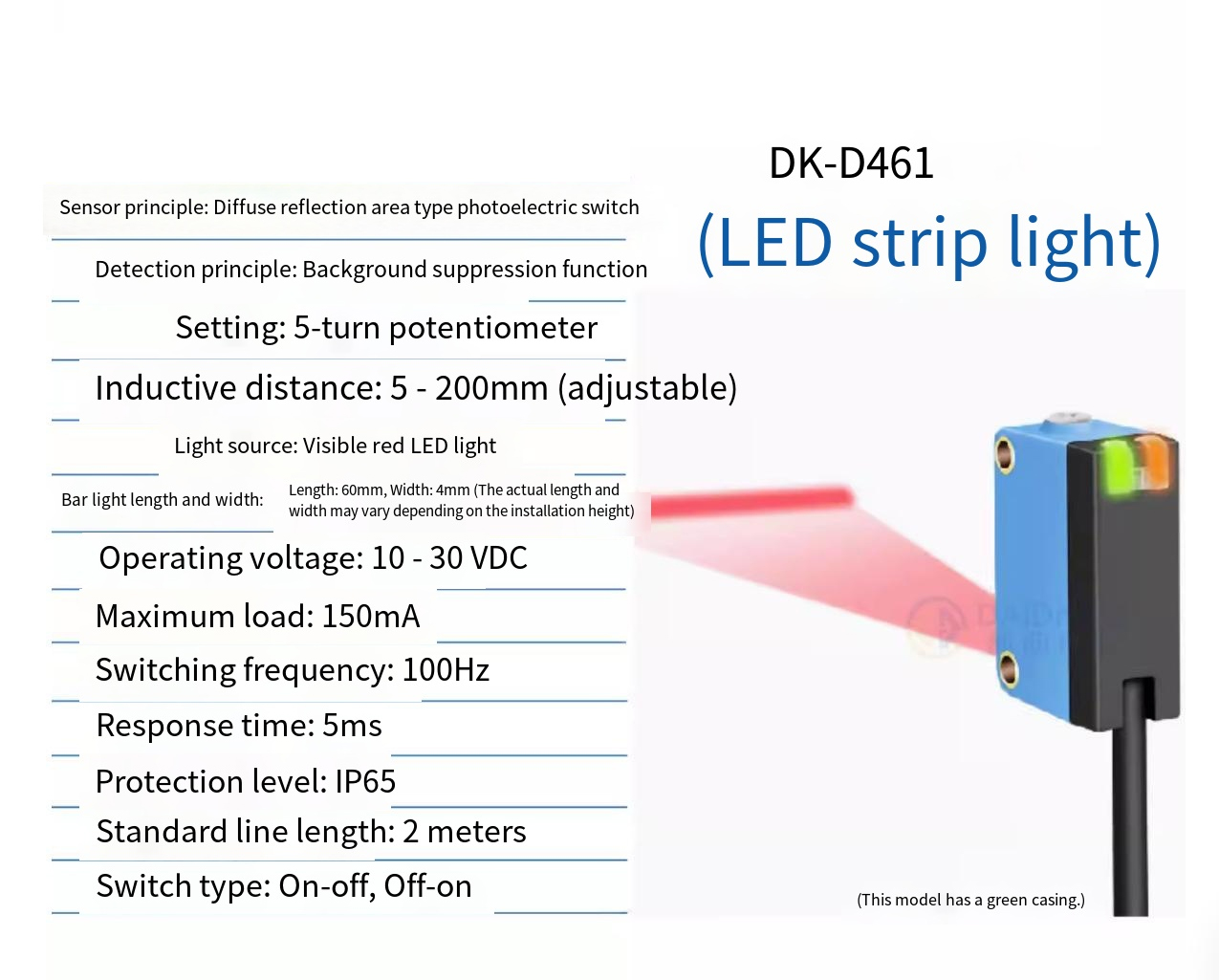
Customers have reported that the sensor fails to detect wooden strips crossing the conveyor belt. Even with the distance adjustment knob set to maximum sensitivity, the sensor indicator failed to trigger. Only 1 in 4 of the wooden strips were sensed by the infrared strip of light emitted by the photoelectric development.
After remote diagnosis, our technician found that the wooden strip was only covered by a quarter of the IR strip. To ensure a stable signal, the object must be covered by at least one third of the area of the IR strip to have a stable signal output. We realigned the sensor mounting position to extend the coverage area.
When using a strip sensor such as the DK-D461 to detect irregular or small objects, mounting alignment is more important than sensitivity settings. Make sure that the target passes through the active sensing core (more than 1/3 of the centre for stable detection) for maximum reliability.
DK-D461 Strip Sensor
Background Suppression Expert
Why a Strip Photoelectric Sensor Misses Small or Narrow Targets
The DK-D461 is a bar-type (strip) through-beam photoelectric sensor: it projects a tall band of infrared light between an emitter and a receiver and switches when an object blocks enough of that band. Unlike a single-spot sensor, the strip pattern is forgiving about the vertical position of the target — but it relies on the object covering enough of the beam area to drop the received light below the switching threshold. When a narrow wooden strip crosses only a small part of the band, the receiver still sees most of the light and may not switch, even at maximum sensitivity. In the case above, a strip that covered only about a quarter of the band was detected just one time in four.
Common Causes of Detection Failure
Most missed-detection problems on a strip sensor come down to a short list of causes: insufficient beam coverage, where the target blocks too little of the band; misalignment, where the emitter and receiver do not squarely face each other and the effective coverage and signal margin fall; contamination, where dust, sawdust or resin on the lens faces weakens the beam — very common in woodworking; sensitivity set too high, which can mask an alignment problem rather than solve it; target properties, where thin, translucent or gappy material lets light through; ambient light or reflective surfaces biasing the receiver; and wiring or supply issues such as the wrong output type, a loose connector or a supply out of range.
Step-by-Step Troubleshooting
Start with the coverage geometry: reposition the sensor so the target crosses at least about a third of the central band. Next, re-align the emitter and receiver for a steady received-signal indication with margin. Clean the optical faces, and in dusty woodworking environments schedule regular cleaning. Set sensitivity for a stable margin rather than maximum, because alignment matters more than gain. Confirm the wiring, output type and supply voltage against the datasheet. Finally, verify with several passes of the actual target — not a hand — so the test reflects real operating conditions.
How to Prevent It
Mount the sensor rigidly so vibration does not shift the alignment over time, keep the lens faces clean, choose a sensing-band height suited to the smallest target you need to detect, and confirm during commissioning that the target reliably covers enough of the band. Treating alignment and coverage as the primary settings — with sensitivity as a secondary adjustment — gives the most dependable result.
Frequently Asked Questions
Why does my DK-D461 strip sensor miss thin wooden strips?
A strip sensor switches only when the target blocks enough of its infrared band. A narrow strip that covers only a small part of the band still lets most light through, so the receiver may not switch even at full sensitivity. Repositioning so the strip crosses at least about a third of the band usually restores stable detection.
How much of the beam must an object cover for stable detection?
As a practical guide, the target should cover roughly one third or more of the active sensing band for a stable output. Below that, detection can become intermittent. The exact figure depends on the model and settings, so confirm with the datasheet and during commissioning.
Is a detection failure usually a sensitivity or an alignment problem?
More often alignment and coverage geometry than sensitivity. Turning gain to maximum can mask a poor setup rather than fix it. Position the sensor so the target reliably crosses the central part of the band, then set sensitivity for a stable margin.
How does sawdust affect a strip photoelectric sensor?
Dust and resin on the lens faces weaken the infrared beam and reduce the signal margin, which is common in woodworking. Regular cleaning of the optical faces and a sensible cleaning interval help keep detection stable.
When should I choose a strip sensor over a spot sensor?
A strip (bar) sensor suits targets whose vertical position varies, because the tall band tolerates height changes a single spot would miss. For very small or narrow targets, confirm the object covers enough of the band; otherwise a different sensing principle or position may be more reliable.
DAIDISIKE Tech & Video Center
Advanced Sensor Solutions for Industrial Safety and Automation
DAIDISIKE Corporate Profile
Discover our commitment to precision engineering and manufacturing.
Safety Interlock DX Series
Real-world application for advanced machine safeguarding.
AGV LiDAR DLD30T-5N 40
Enhanced perimeter security and collision prevention solutions.
Vehicle DQLV Light Curtains
Optimized for toll stations and weighbridges profiling.
Measuring DQL Series 3D
Dimensional measurement and object positioning principles.
DQC Universal Grating
Installation guide for hand & finger safeguarding.
Waterproof DQR Series
Performance under high-pressure washdowns.
Color Mark Sensors
Intelligent recognition for high-speed packaging lines.
Strip DK-D461 Sensors
Advanced background suppression for irregular shapes.
Area DQSA Protection
Cost-effective side safeguarding using mirror reflection.