Light Barrier (Safety Light Curtain): Working Principle, Types & Machine Guarding Guide
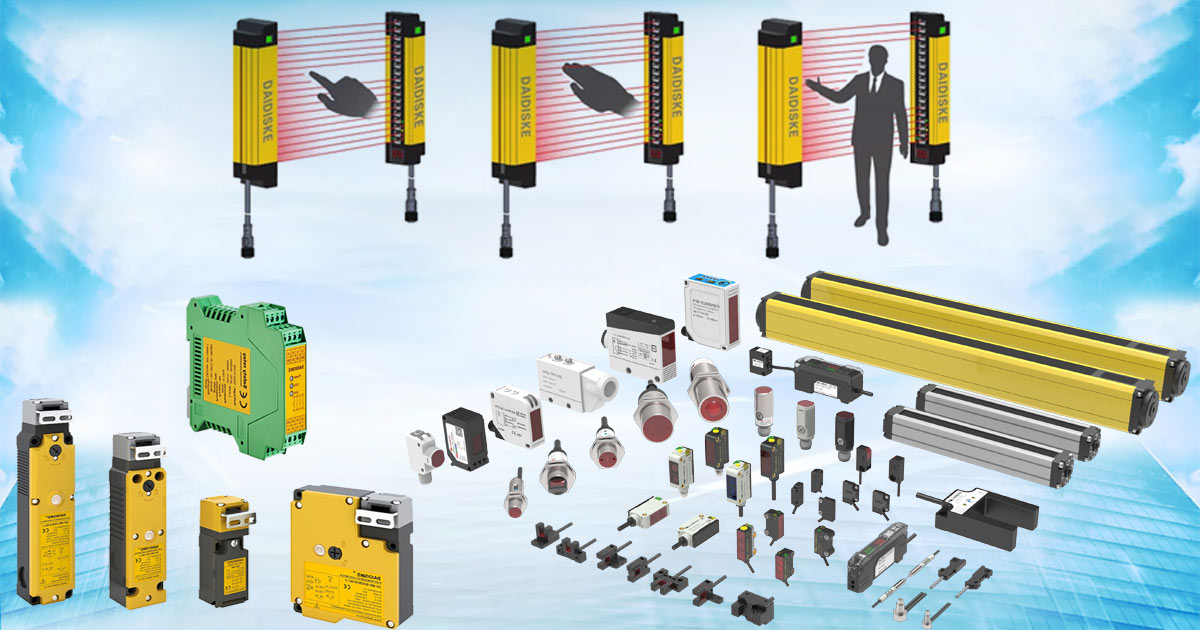
First, an introduction: how Type 2 and Type 4 safety levels are classified
Type 2 and Type 4 describe two safety levels of the same light curtain working principle; the difference lies in the level of fault tolerance each provides.
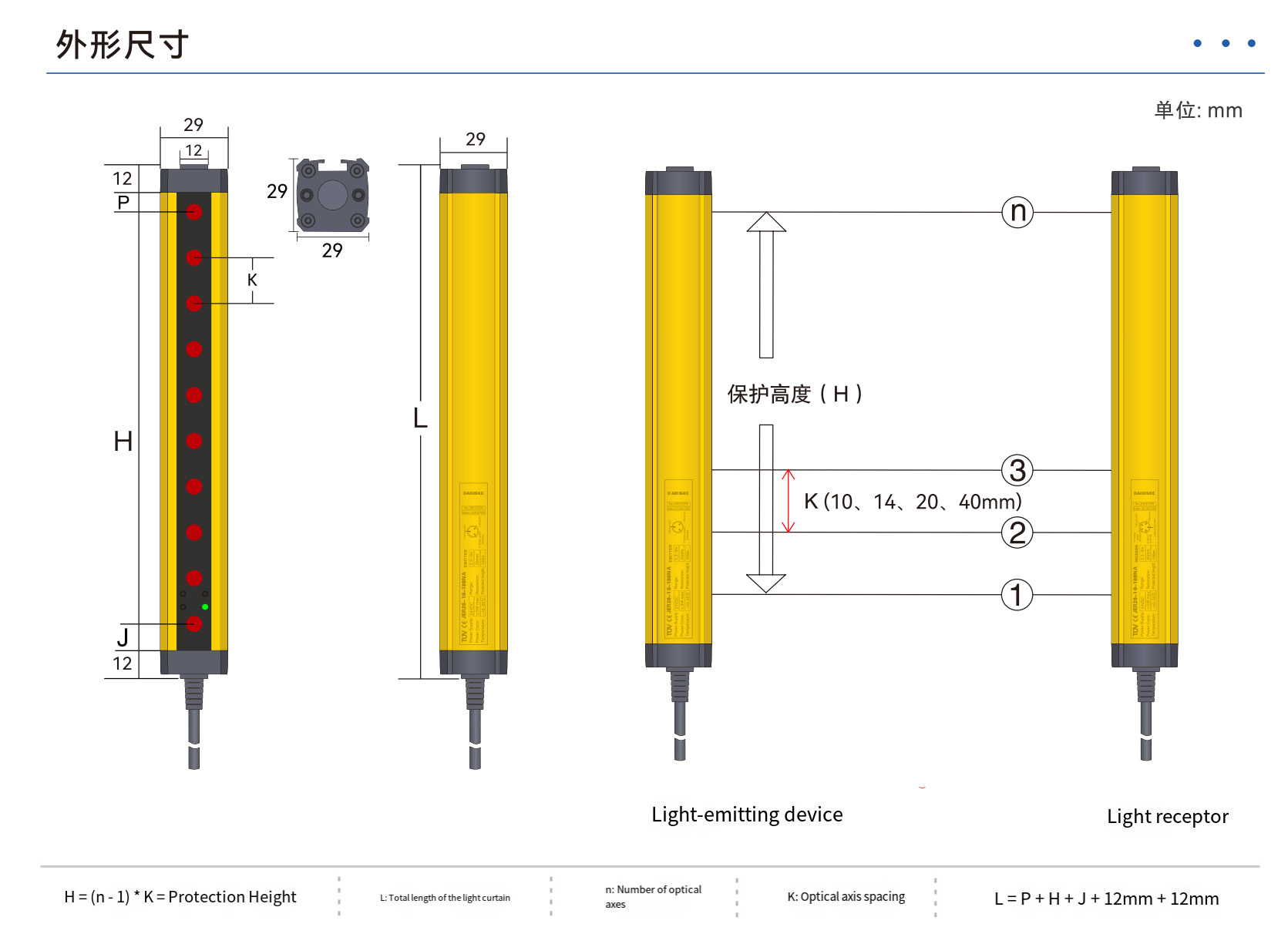
In industrial safety, safety light curtains are classified as Type 2 (Category 2) or Type 4 (Category 4) under the international standard IEC 61496-1/-2. Technically, a Type 2 curtain provides a single switching output that can be wired directly to a PLC DC input, while a Type 4 curtain provides dual-channel outputs (dual NPN or dual PNP) and is used together with a safety relay module. By appearance, a Category 2 curtain tends to have a slimmer housing. There is usually a blind zone at each end of the curtain. Taking the JER series as an example, the top and bottom margins of the housing fall outside the beam field, so the curtain cannot protect those areas. The span between them, H, is the effective protection height, and this region is the effective protection range.
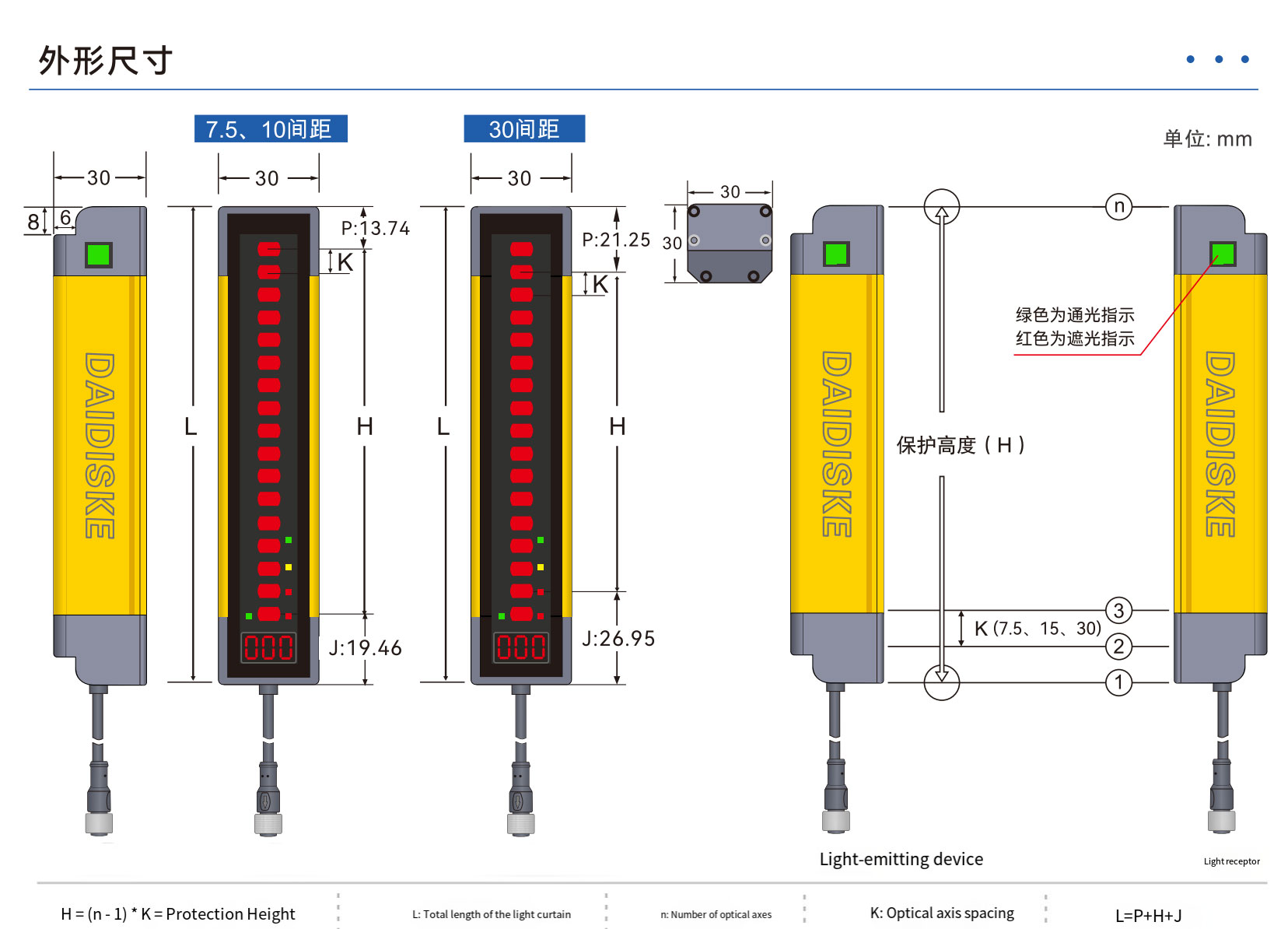
Next, 4 types of light curtains are like DQT4 series, the entire detection field acts as the protective surface with no blind zone, so the safety level is very high.
Second, how a safety light curtain works: from infrared emission to a millisecond stop (response time)
A light curtain’s protective capability comes from its ‘emit - receive - control’ closed-loop system. The underlying mechanism can be broken down into the following key stages:
- Infrared beam matrix: the transmitter and receiver are mounted symmetrically on either side of the hazardous area. The transmitter emits modulated infrared beams (850 nm near-infrared, invisible light) at a frequency of 20-50 kHz, forming a dense beam matrix with 14-40 mm spacing that fully covers the protected area.
- Real-time signal verification: the receiver picks up the synchronised beams through high-sensitivity PIN photodiodes, scanning every beam every 1 ms. It accepts only the matching coded infrared signals, effectively filtering out sunlight, factory lighting and other stray-light interference.
- Intrusion detection: when a person (finger, arm) or a foreign object enters the protected area and blocks one or more beams, the receiver detects the interruption within 1 μs and reports the ‘blocking event’ to the controller.
- Millisecond safety stop: the industrial MCU controller switches the OSSD safety outputs off within ≤10 ms, cutting power to the controlled machine and stopping the moving parts within their inertia range (for example, the press slider brakes within ≤50 ms).
- Reset and recovery: once the object is removed and the receiver regains the complete beam field, a manual or automatic reset confirms the safe state. The controller then restores the OSSD outputs and the equipment can be restarted.
Third, the core types of safety light curtain
Light curtains are categorised by safety level and protection requirements:
- By safety level (IEC 61496 standard), there are two main types:
- Type 2 light curtain: single-channel design with no redundant self-test, suitable for very low-risk applications (such as a small conveyor belt). It is cost-effective but offers only limited fault tolerance.
- Type 4 light curtain: dual-channel redundant design, in which all core circuitry and optical components are duplicated. It runs a full-system self-test every 10 ms and maintains protection even if a single point of failure occurs, so it is mandatory for high-risk equipment such as presses, robots and automation lines.
- By detection capability (resolution)
- finger protection type (10,14mm resolution): beam-distance ≤ 14mm, can detect fingers and other small parts, suitable for precision machine tool protection, precision instrument protection.
- Hand protection type (20, 25, 30mm resolution): Suitable for typical hand protection scenes including injection moulding machines, packaging machines and spring automation equipment.
- body protection type (40, 80, 200mm resolution or higher): for full body protection or for large equipment peripheral isolation such as AGV trolley travelling path.
- Based on the environmental flexibility
- waterproof/dustproof type (IP65/IP67/IP68): sealed structure design, best for dusty and humid food processing, lithium fabrication facility.
- Light Intrusion Resistance capability: In the presence of pulse code modulation technology, a 100,000 lux direct sunlight can be resisted and used in outdoor or high brightness scenes.
Fourth, machine-guarding applications: from stamping to logistics, covering the whole industry
- Metal-processing machine safety: on punching machines, shearing machines, bending machines and similar equipment, a Type 4 light curtain monitors the operator’s hand position in real time and helps prevent crushing and cutting injuries, without obstructing mold changes or material feeding.
- Industrial robot work-cell protection: a light curtain encloses the robot’s working range and triggers an immediate stop when personnel enter the area, safeguarding human-robot collaboration in scenarios such as automotive welding and electronic assembly. On automated production lines (conveyor belts, packaging machines, and the infeed and outfeed of injection moulding machines), the curtain can tell the difference between a person and passing material, stopping the machine only for personnel and so improving productivity. For warehouse and logistics equipment with automated AGV loading and unloading, mounting light curtains on the vehicles helps avoid collisions between personnel and vehicles, which suits high-traffic logistics environments.
Fifth, selection and installation guide: avoiding common misconceptions
- Selection of core parameters
- protection height: per the height of equipment hazard area chosen (typically 300 mm-1800 mm), such as punching presses, upper and lower mould travel range should be covered.
- Protection distance: 0.5-20m conventional, long distance models up to 50m are recommended, should be compatible with the width of the equipment and installation environment.
- Response time: In order to ensure that the shutdown event takes place before the human body interacts with the hazardous point, we recommend selecting high-risk equipment within ≤10ms.
- Certification: Select products with CE, TUV, SIL/PL certificates to comply with international safety standards.
- Installation Key Points
- Precision alignment: keep the transmitter-to-receiver deviation within ≤±0.5°; a laser alignment aid can help achieve this.
- Safety distance calculation: Determine the safety distance according to braking behavior of the apparatus (safety distance = Response time × maximum speed of equipment + buffer distance), avoiding the personnel touching the risky point before the machine stops.
- Anti-interference layout: avoid strong direct light or reflections and add a light shield if needed; where two curtains are installed side by side, set them to different frequency codes to avoid cross-interference.
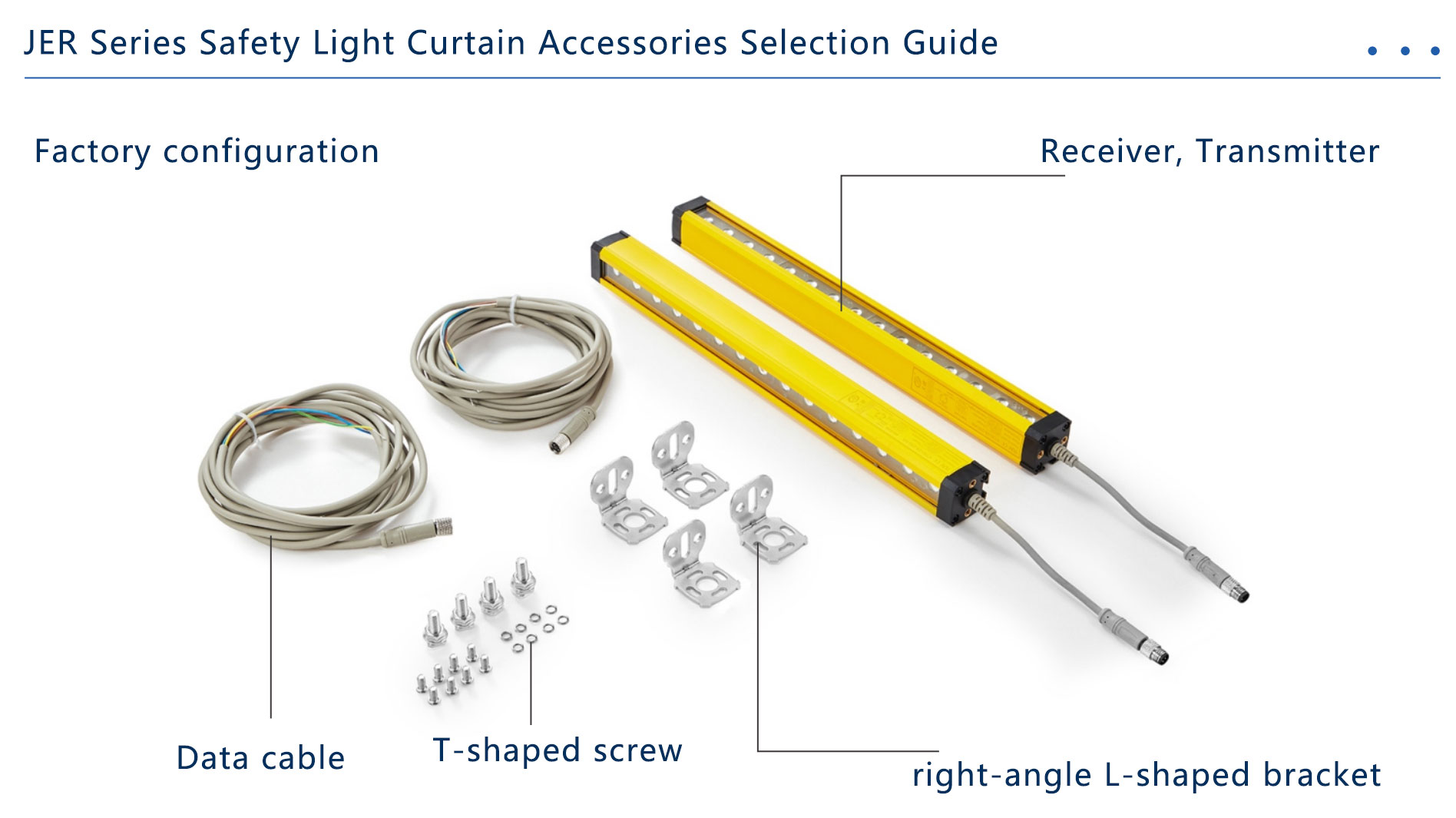
VI. Typical Troubleshooting and Maintenance Specifications
- Troubleshooting
- False Trigger: Verify whether filter lens is dusty, poorly installed or noisy light/vibration interference; you may choose the size threshold through the ‘Material Exemption Function’, to minimise the misjudgment.
- Beam Interruption Alarm: Calibrate transmitter and receiver alignment, verify power supply stability (needs 12-30V DC regulated power supply).
- OSSD Output Incorrect: Verify the redundant channels function by testing controller circuit and wiring.
- Maintenance Recommendations
- Once a month, clean lenses to test beam smoothness.
- Perform quarterly functional tests to check the downtime response time.
- Record a fault log to conduct periodic faults assessments to detect issues such as loose wiring and light source attenuation. If there is broken wiring or a loose interface, it must be addressed immediately in order to avoid the short circuit.
VII. Conclusion: technology-based safety, efficiency and balancing protection
The real value of light barriers (safety light curtains) is that they free machine guarding from the limitations of a physical fence, delivering both safety and efficiency. As a long-established sensor brand, DAIDISIKE offers Type 4 light curtains with IP67 protection and a 10 ms response time, suited to stamping, robotics, logistics and many other industries. For tailored protection or free selection support, reach out to our technical team to make a safety light curtain the ‘invisible umbrella’ for your production line. Once you understand the difference between Type 2 and Type 4 light curtains and their respective application environments, choosing the right model for your own equipment becomes far more straightforward. We hope this overview of real factory applications helps you understand safety light curtains better.