How Do Safety Light Curtains Work?
What is a Safety Light Curtain Sensor?
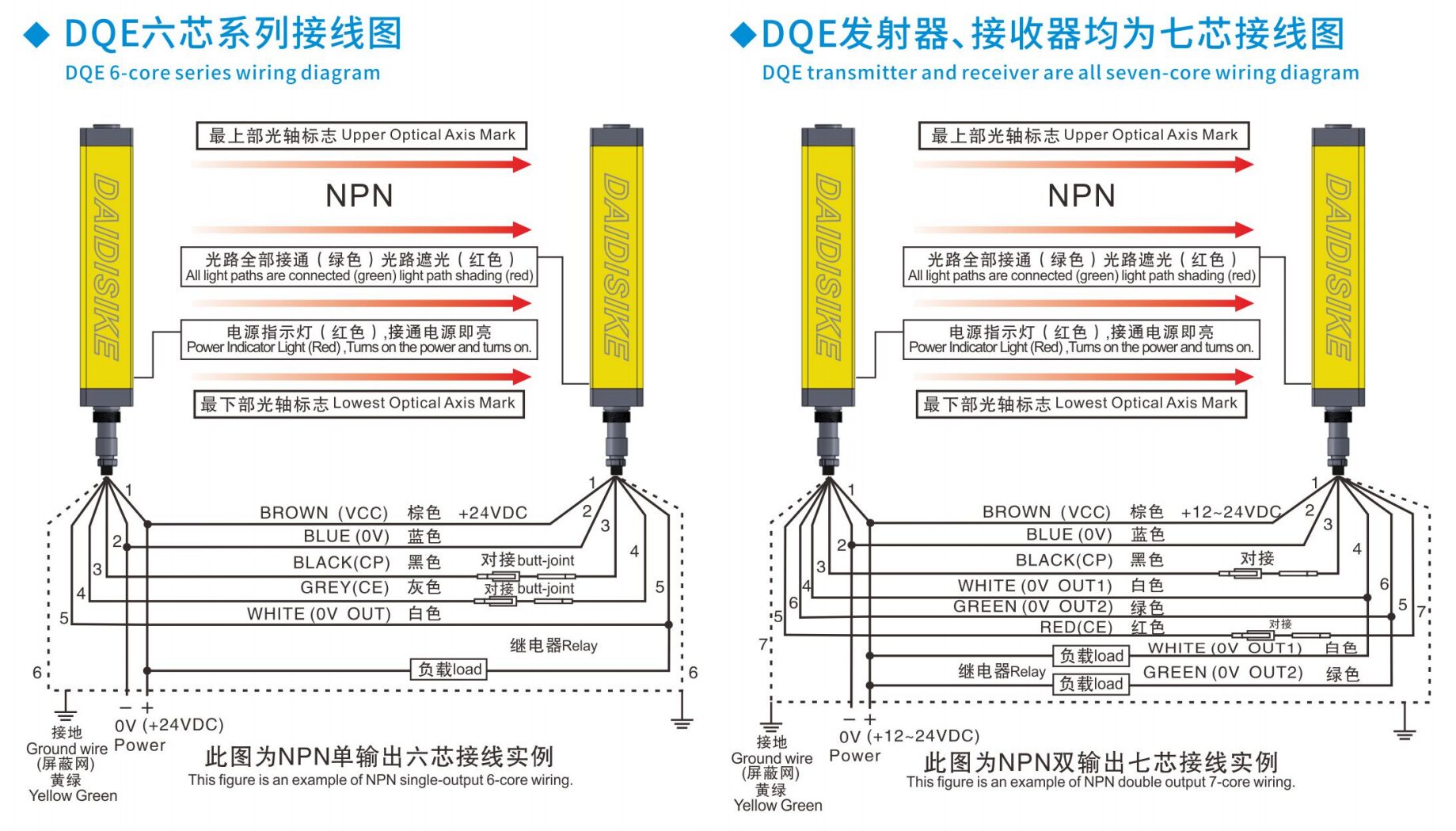
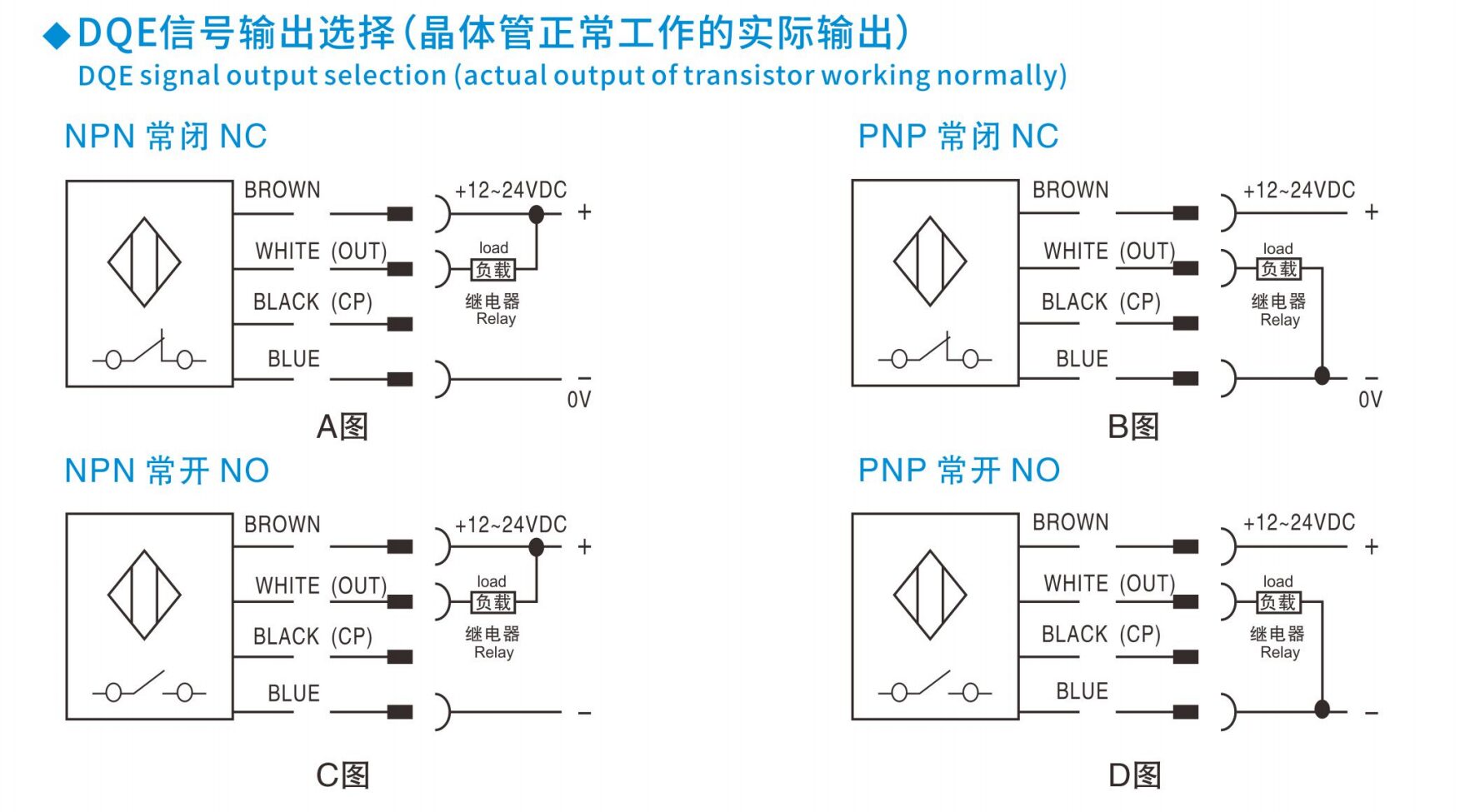
Examine how the principle of operation of a light curtain is shared by the professional maker DAIDISIKE 戴迪斯科, with the electrical wiring layout for one of our products, the DQE collection, as an illustrative case. In unsafe places that can be fatal, like strike presses and robotic assembly lines, why do machines ‘stop promptly’ when no one bothers to switch the switch? The answer is the ‘infrared sensing magic’ of the safety light curtain. Physical guardrails don't need to be utilized to prevent intrusion — the undetectable beams of light can develop safety protection, and the reaction speed is 10 times faster than a human blink of an eye (just 10 ms).
This article uses the most colloquial language and takes apart the entire working of the safety light curtain, so you understand what it does from ‘launch light beam’ to ‘trigger shutdown’, protecting employee safety. A Safety Light Curtain (Safety Light Drape or safety grating) is an optoelectronic safety shielding device, widely used in the field of industrial automation. Through the emission and reception of infrared beams of light, it supplies an ‘invisible wall of protection’ — a non-contact safeguard established in accordance with the international safety codes (such as IEC 61496-1/2 Type 4, ISO 13849-1 PL e).
I A. Core Components
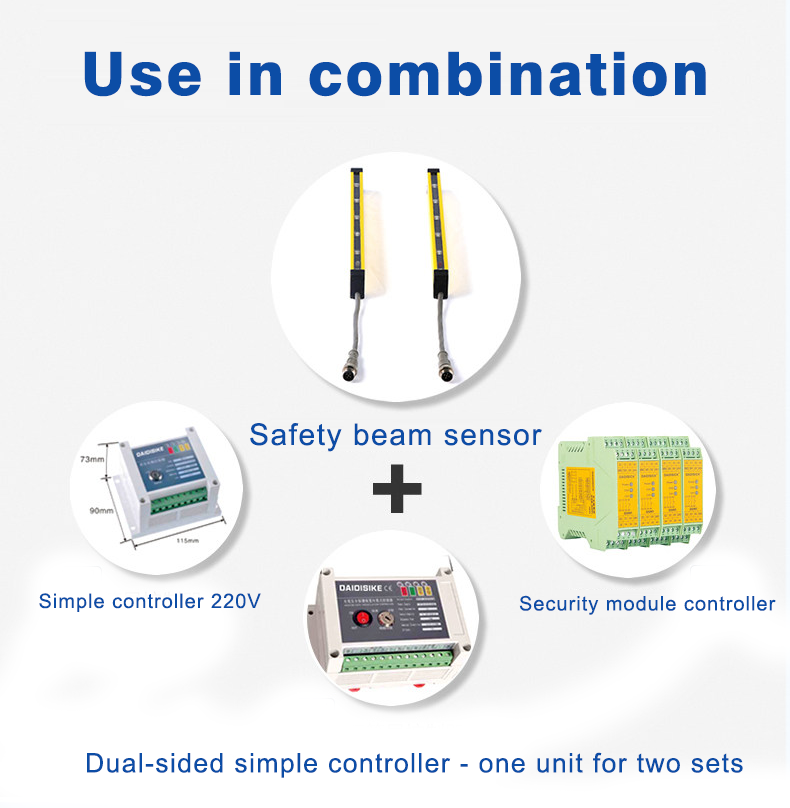
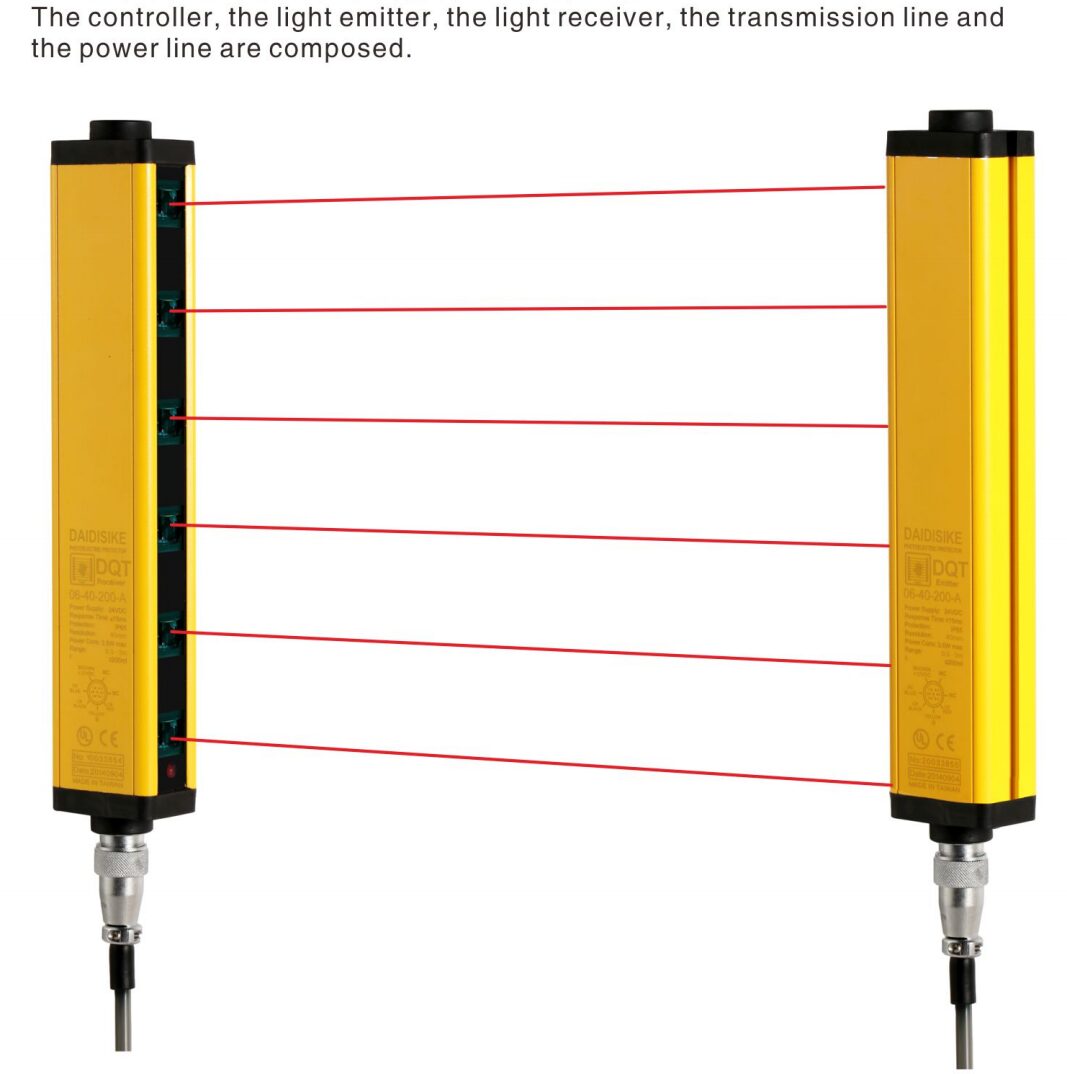
The safety light curtain relies on the operation of a whole ‘transmitter-receiver-controller’ control system, mainly made up of 3 basic parts:
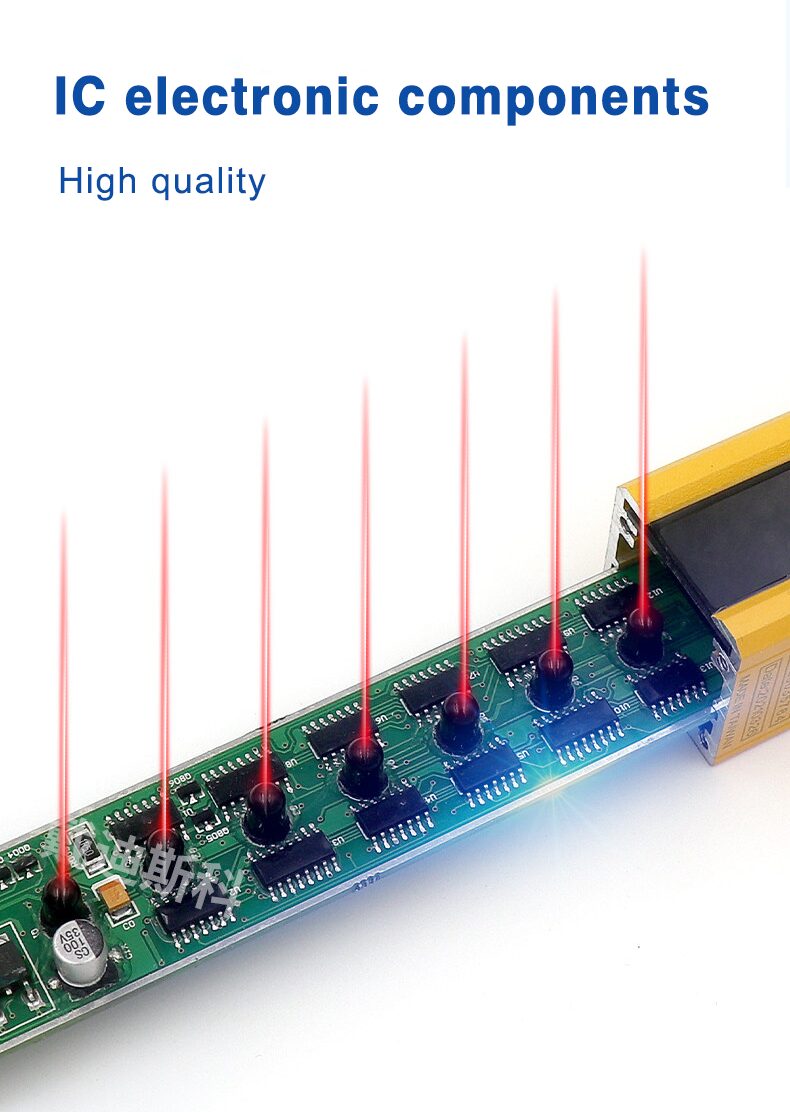
- Transmitter: Peripherally emits numerous parallel modulated infrared beams (wavelength normally 850nm invisible light). To eliminate interference from adjoining light curtains or ambient light, each beam has its own code via pulse code modulation (PCM). Beam density is modelled to define the resolution (e.g., 14mm finger protection, 30mm palm protection, 40mm or more for body protection).
- Receiver: Receives the corresponding beams synchronously (response time ≤ 1μs) using high-sensitivity photodiodes. Only accepts signals compliant with the encoding, and filters out disturbance from sunlight, lighting and other stray light. Continuously checks beam integrity and its present state in real time.
- Controller: Processes the receiver signal and performs safety logic judgement. Outputs the OSSD safety signal (dual-channel redundancy), controls equipment operation or emergency shutdown. Its self-diagnostic function automatically enters the safe state in the event of an internal failure.
II. The Safety Light Curtain Working Process (5 Stages)
The process is broken down into 5 stages for an ‘intrusion-to-shutdown’ cycle measured in milliseconds:
- 1. Establishing the light curtain: When transmitter and receiver are set in precise alignment, the transmitter starts transmitting the infrared light beam matrix and an entire ‘light curtain’ is formed.
- 2. Normal monitoring: When all beams are received, the controller generates a ‘safe on’ (OSSD is ON) signal to allow the controlled equipment to run in normal operation.
- 3. Intrusion detection: When a human body, or another object, blocks one or several light beams, the receiver detects the missing signal and instantly sends the interruption signal to the controller.
- 4. Safety shutdown: The controller switches OSSD to OFF within ≤ 15 ms for emergencies and cuts the power of the equipment to bring the tool to a stop.
- 5. Reset recovery: After the object is completely cleared, the operator confirms it is safe to re-issue the open signal, and the equipment resumes operation.
III. Crucial Technical Functions
- Quick reaction: ≤ 15 ms to ensure equipment stops before unsafe motion occurs.
- Anti-interference: Pulse coding and filter lenses guard against bright light or electromagnetic interference.
- Redundancy and fail-safe: Type 4 light curtains have dual-channel architecture + real-time self-testing.
- Advanced features: Including Blanking, Shielding (Muting), and Adaptive adjustment.
Safety Light Curtain for Hand and Finger Protection
IV. Performance Parameters and Application Implications
- Resolution: 10mm / 14mm for finger protection; 30mm for palm protection.
- Protection height: 300mm to 2100mm.
- Protection range: 0.5 to 20 meters (up to 50 meters for long-range models).
- Ingress protection: IP65 / IP67, dustproof and waterproof.
V. Frequently Asked Questions
1. Why doesn't the passing material cause the shutdown process?
The recognition logic allows compounds that fulfill pre-programmed conditions to pass through, while the human body will trigger the shutdown.
2. Will an extreme environment affect its stability?
Industrial light curtains from DAIDISIKE 戴迪斯科 have a wide temperature operating range (-25°C to +55°C) and a shockproof design ensuring high stability.
3. What is the difference between Type 2 and Type 4?
Type 4 adopts dual-channel redundancy + real-time self-test for high-risk equipment; Type 2 is single-channel for low-risk scenarios.